The Senseless TRAGEDY of 1883

I lost my GREAT GREAT UNCLE to a devastating accident 139 years ago. His name was Levi. He was only 23 years old when he lost his life.

Levi had his entire life in front of him. Little did he know that on April 22, 1883, he would encounter the worst day of his life.  

Sunday. The day the accident happened.

When someone dies, have you ever given much thought to which day of the week they passed away? We often talk about how we want the date of the death of our loved ones to skip over holidays and birthdays because it creates a gloom over such special days. But we don’t get to choose when we die.

We rarely think about how death on a particular day of the week will affect us forever. If someone dies on a Tuesday or a Thursday there is no strong feeling derived from that day. But Sundays are different.

Sundays are for going to church. Eating a big lunch. Taking a nap. Playing outside. Enjoying the family. Resting under the willow trees as the wind spreads out the long branches.

Have you ever stopped doing something indefinitely because you found out about someone’s death as you were enjoying a particular event or activity? Once your heart connects a person’s death with something you love doing, often you lose the desire to continue with that life-giving pursuit.

I have a friend who refused to dine at a particular restaurant because he was eating there when he received the news about the death of his dad. He couldn’t overcome the image of that fateful day when he was in the middle of eating a cheeseburger. He left the juicy piece of beef on the table, rushed out of the building, and raced to the hospital. In his mind, the uneaten meal is still sitting on the table, waiting to be finished.

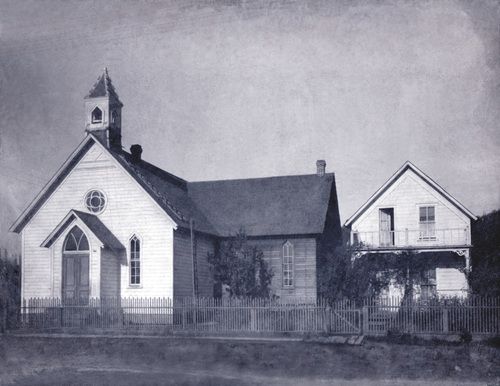
That Sunday was rainy, overcast, and gloomy. Typical spring Indiana weather. Levi and his eighteen-year-old sister Elizabeth were riding together in a horse and buggy to church. Elizabeth decided to pull out an umbrella and open it to shield them from the huge rain drops falling from the grayish clouds.  
The simple act of expanding an umbrella spooked the horse.

The hoofed beast reared its front legs and bolted down the road and into the ditch.

The steep decline flipped the buggy sideways, throwing Levi from the safety of his seat.

A board fence abruptly stopped his motion

Levi died from internal injuries three days later.

One morning Levi is a young, strong, energetic twenty-something. Later that week he is dead. How could an umbrella, horse, gravity and a fence be the recipe for death?

What a senseless tragedy.

Two individuals were riding the same horse and buggy on a rainy day. Why was Levi thrown from the buggy to his death at the age of 23? Why did Elizabeth receive the privilege of living 68 more years on this planet? She died at the ripe old age of 86. Something does not seem quite right. Life often seems intolerably unfair.

If I could sit down with Elizabeth and ask her about this accident, what would she have said? She carried the burden of this memory for almost seven decades. How many times did she ask “IF ONLY” to herself after this horrible day?  

IF ONLY…I hadn’t opened the umbrella.

IF ONLY…the horse remained calm.

IF ONLY…it was me hitting the fence.

IF ONLY…Levi would have struck a soft patch of grass.

IF ONLY…

Have you ever played the game of “IF ONLY”? If you’ve played it, you have always been the loser. Playing this game will only send our mind into a dark place. Resist the temptation to dwell on all the different scenarios that could have changed the outcome of the tragedy

When our minds begin to think “IF ONLY”, combat these worthless thoughts with truth. Not one human is able to turn back the clock of time and change any event. Not one human knows or understands all of the variables that formulate a tragedy. It is harmful for your mind to spend too much time in the confusion of “why” something happened. You might understand a certain percentage of “why” but God knows every situation fully. We must consistently remind ourselves of this truth:

As the heavens are higher than the earth, so are My ways higher than your ways and My thoughts than your thoughts. As the rain and the snow come down from heaven (Isaiah 55:9-10).

God’s ways are higher than our ways. He knew why Levi was thrown out of the buggy and died. That is high level despair. When we try to reach that high with our minds, our souls regress into a pit of misery.

I find it fascinating that the context of this passage in Isaiah includes rain.

Rain caused an umbrella to open,

which caused the horse to bolt,

and caused Levi to fly into a fence,

ultimately causing his death.

What caused Levi’s death? Rain? Umbrella? Fence?

The answer is… ONLY GOD KNOWS.

Fast forward from April 22, 1883 to April 28, 2022. The day my mom died. It has been difficult to make sense out of her death. A virus attacked her body.

A virus that has claimed the lives of 6,330,572 humans worldwide.

The virus is so tiny that we cannot see it with our eyes, but its destructive power has been felt in almost every family throughout our planet. 

I’ve played the “IF ONLY” game a few times over the last few months.

IF ONLY…the virus never arrived in 2020.

IF ONLY…the virus didn’t linger for a couple years.

IF ONLY…she didn’t have a compromised immune system.

IF ONLY…the medication worked.

IF ONLY…God healed her lungs.

IF ONLY…

There is no winning this mind game. I must instead fill my mind with “whatever is true, noble, right, pure, lovely, admirable” (Philippians 4:8). During the aftermath of a tragedy, we must train our brains to think about what is excellent and praiseworthy.

When my mind wants to play the “IF ONLY” game, I instead will focus on these two truths:

#1 - The SECRET THINGS belong to the Lord (Deut 29:29).
#2 - The Lord is GOOD, a refuge in times of trouble. He CARES for those who trust in Him (Nahum 1:7).

God is both good and supernaturally powerful. If God is only good, but doesn’t have the intelligence or the strength to perform miracles, then He is not fully divine. If God is only higher than us without any compassion, then He is merely a heavenly dictator. But if God is caring, omnipotent (all-powerful), and omniscient (all-knowing), then we can TRULY TRUST in Him, no matter what tragedy we encounter.

When a man dies from an umbrella, I will trust in God’s goodness and knowledge.

When a woman dies from a virus, I will trust in God’s goodness and knowledge.

When you face a senseless tragedy, will you trust in God’s goodness and knowledge?
FEAR of BAD NEWS


It is easy to call God good when things are good. But to look tragedy in the face and still believe wholeheartedly that God is good, that is faith.

God doesn’t always come through for you in the way you envision, pray or hope. The words of too many contemporary worship songs inspire us to believe in the impossible and then when we experience a real life tragedy we’re devasted. Too many preachers present theology in such a way that we think that if we have the faith the size of a mustard seed, then we obligate God to work on our behalf. But real life contradicts that kind of preaching. What we need to help us through tragedy is the fullness of Scripture in our lives.  

The older someone gets, the more they realize that they live within this general cycle: about to enter a trial, in the midst of a trial or recently got out of a trial. Yet, we never seem ready to go into a trial. The fear of receiving bad news can paralyze our minds. We spend many hours a day thinking about what “bad thing” is going to happen next. If you don’t struggle with this kind of anxiety, good for you. But I have seen many individuals struggle with this crippling nervousness.

Have you ever looked at the name of the person calling you on your phone and you freeze in fear for a moment because you dread what that person is going to tell you on the other line? You answer the phone call anyway because not knowing is also agonizing. If you have had to endure “receiving bad news” from various people and in different ways, then certain situations will trigger your emotions. 

Psychologists call the fear of receiving bad news anticipatory anxiety. When you cannot predict or control the future and it negatively impacts your daily life, then you need to face this fear and overcome it. Hopefully, the following story will help you find a way to free yourself from the fear of receiving bad news.  


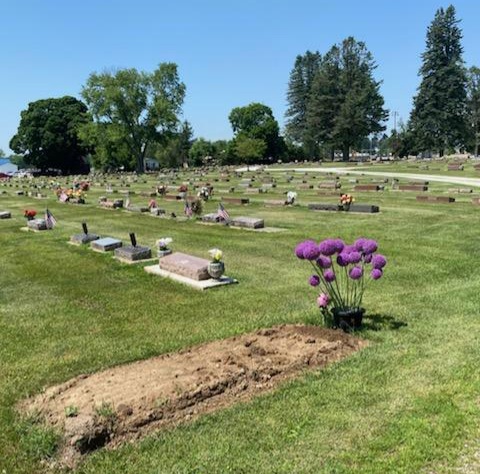
My dad picked my mom’s favorite flower (Jewel of Tibet) and placed it at her grave.


At 7:55 p.m. on a Friday night, I received one of those dreaded calls. My sister called and said that they were taking my mom to the emergency room because she was having a hard time breathing. Fear sunk into my heart that night, but I tried my best to push it aside and believe for the best. The trip to the hospital was precautionary, or so I had hoped.

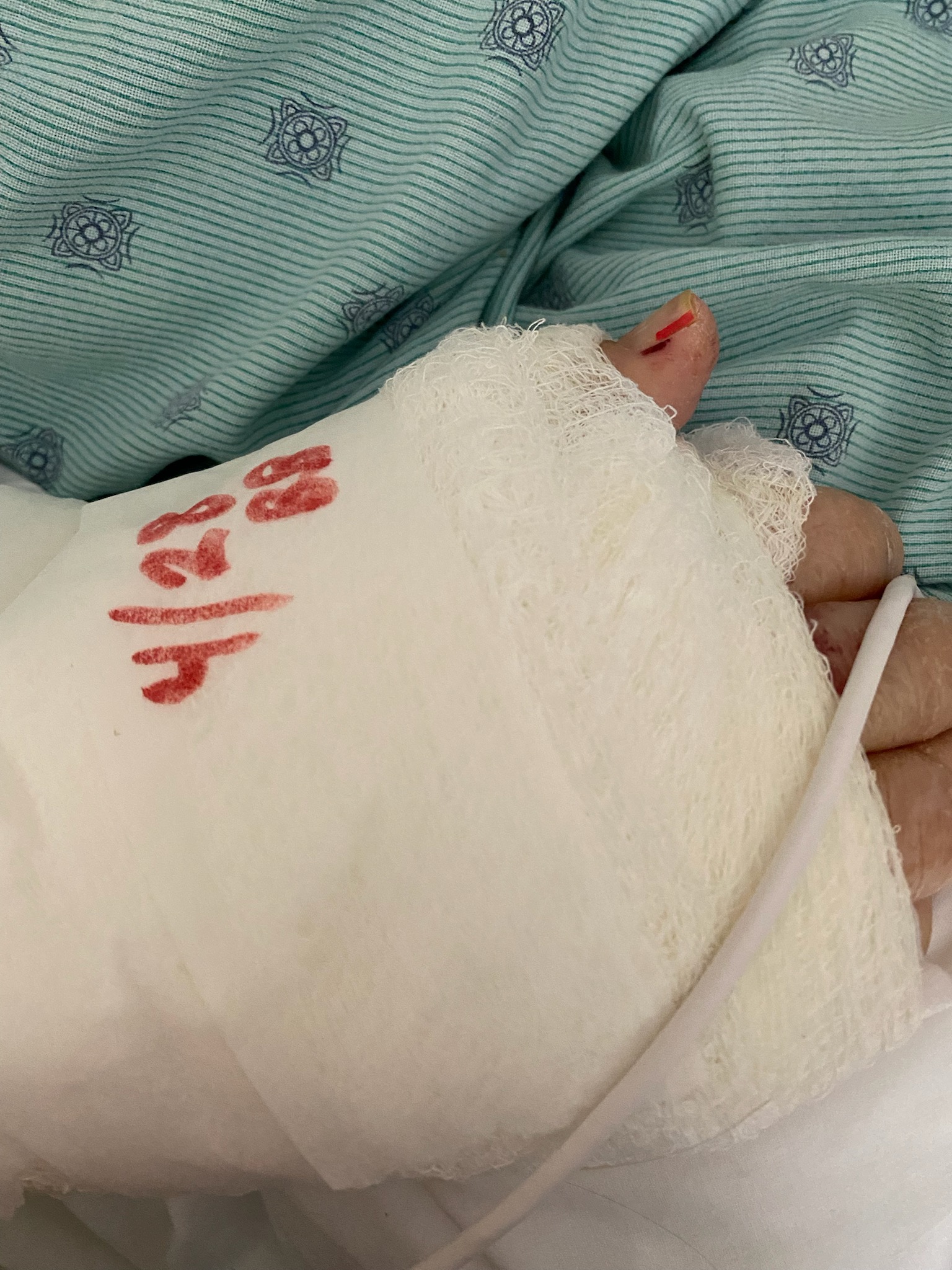
112 days. My mom spent 112 days in the hospital. When she first checked into the hospital, we were optimistic that she would be out in a couple weeks. But that first weekend she was moved into the Intensive Care Unit. A couple weeks later she was placed on the ventilator. A few weeks after that they placed a tracheostomy tube in her so that she could continue on the ventilator. She developed pneumonia several times. She fought sepsis a couple times. She started to get better and then would have set backs. We would receive positive news one day and then the next we would be given devasting news. 

In the middle of the 112 days, we discovered a verse in the Bible that encouraged us. We had no idea that my mom would spend 112 days in the hospital, so when we read the words of Psalm 112, we held onto these words not knowing that God, in His sovereignty, was preparing us. For example, we found Psalm 112 during February. My mom had been in the hospital for about fifty days at that point. There was no numerical connection between Psalm 112 and her spending 112 days in the hospital yet. This is what Psalm 112 states:

“They will have no fear of bad news” (Psalm 112:7).

Whenever my dad, my sisters or myself would receive bad news from the doctor or from lab reports, we would continue to hold onto hope. We were given bad news dozens of times during these 112 days, but we never remained in a place of fear.

We refused to allow bad news to shake us. Our hearts stood steadfast and secure. We trusted in the Lord. 

We met several doctors who had one hundred percent trust in medicine and the health care system, but zero percent trust in God. We also met a couple doctors that seemed to be believers. A doctor who is skilled in medicine and trusts in God can become one of the most powerful forces in our world. For God created medicine and He is the author of both natural miracles and supernatural miracles.  

Late one night, I was reading a report from one of the doctors. He didn’t give my mom much of a chance for recovery. At the end of his report, he wrote the words, “Prognosis is poor.” When I first read this three-word phrase, fear entered my heart. I envisioned an outcome that I was dreading. But then just as quickly as fear struck me, I was also given a peace that filled my heart instead. I had to make a choice in that moment. Will I fear the bad news, or will I trust God? Will I be consumed with terror, or will I rest in calmness that God is in control? 

The doctor was not God. He cannot determine the future. I am not God. I cannot determine the future. God is the one who decides what the future holds. 

Why should we have no fear of bad news? Is it because everything will turn out exactly how we want? No. Anyone who has lived long enough realizes that sometimes bad news turns into reality. In the midst of the unknown, God wants us to trust Him. But when we fear the bad news, we worry, we increase our anxiety levels, we fret about things we cannot change and we miss out on learning a valuable lesson: God wants us to rest in Him while we wait, wondering if good or bad will actually happen. 


Fast forward to day 112. The bad news turned into reality. My mom died. Why did God, in His sovereignty, allow my mom to live the last several months of her life in the hospital? Would it have been better if she would have died after ten days? Or a month? When I counted up the days in my head as I was driving home from the hospital that night, I couldn’t believe the number. So, I counted again. And then I counted a third time. My mind immediately went to Psalm 112.

In Psalm 112, we are told to not fear bad news. But how does that work? God is specific in how that is possible. 

Their hearts are steadfast, trusting in the Lord. Their hearts are secure, they will have no fear;in the end they will look in triumph on their foes (Psalm 112:7-8).

Bad news tries to shake us, but if we have a relationship with Jesus Christ, we remain steadfast and secure no matter what happens. Even in those moments of weakness when we feel our emotions melting into a puddle on the floor, we focus our attention upon God and we trust Him to sustain us and take care of us in the midst of a trial. 

But you might ask, “God didn’t come through for you. He allowed your mom to die. Don’t you feel like God failed you?” 

No. Because my perspective as a Christian is not just what happens on this earth. Look at verse eight again. “In the end they will look in triumph on their foes (enemies).” In this case, disease and death were the foes. Disease and death won the battle. But because of my faith, I know that in the end, God will make all things right. I hold onto that hope that when I breathe my last breath I will see my mom once again and it will be for millions and billions and trillions of years with no end in sight. With this eternal perspective, death has been swallowed up in victory and no longer has a sting (1 Corinthians 15:54-55).

Let me rephrase that. I will feel the sting of my mom’s death until the day that I die. I miss her fiercely. But I know that I will see her again. I trust in my God because of what He DID (“He has risen” – Matthew 28:6) and what He SAID (“I am making everything new!” – Revelation 21:5).

I will see my mom again someday. I am deeply saddened because I wish she could have enjoyed this upcoming decade and watched more ball games, seen more graduations and taken more family trips.

We will miss her presence at our family events because she will be absent from my earthly life. But as a Christian, I must trust in Christ if I am to claim that He is my savior. 

It is easy to call God good when things are good. But to look tragedy in the face and still believe wholeheartedly that God is good, that is faith. And it is a faith that is steadfast and secure. 

I have found that God is a God of details. There is no coincidence that God allowed my mom to live 112 days in the hospital and then pointed our family to Psalm 112. You might be thinking how difficult it was to see someone suffering for that long. Yes, it was a long time in our eyes. But when you measure 112 days in view of the next life that is ever lasting, the 112 days are barely a blink. 

Most of those 112 days were exhausting emotionally and physically. They were filled with many tears and questions about the future. But during this time, our family had a peace that transcended our own human understanding. It is because we trusted in the Rock eternal.

You will keep in perfect peace those whose minds are steadfast, because they trust in you. Trust in the Lord forever, for the Lord, the Lord himself, is the Rock eternal (Isaiah 26:3-4).