The exchange of GRACE









The exchange of GRACE
As you’re gathering today around the table to eat all the wonderful food someone has prepared for you, take a moment to recount this story to your loved ones.
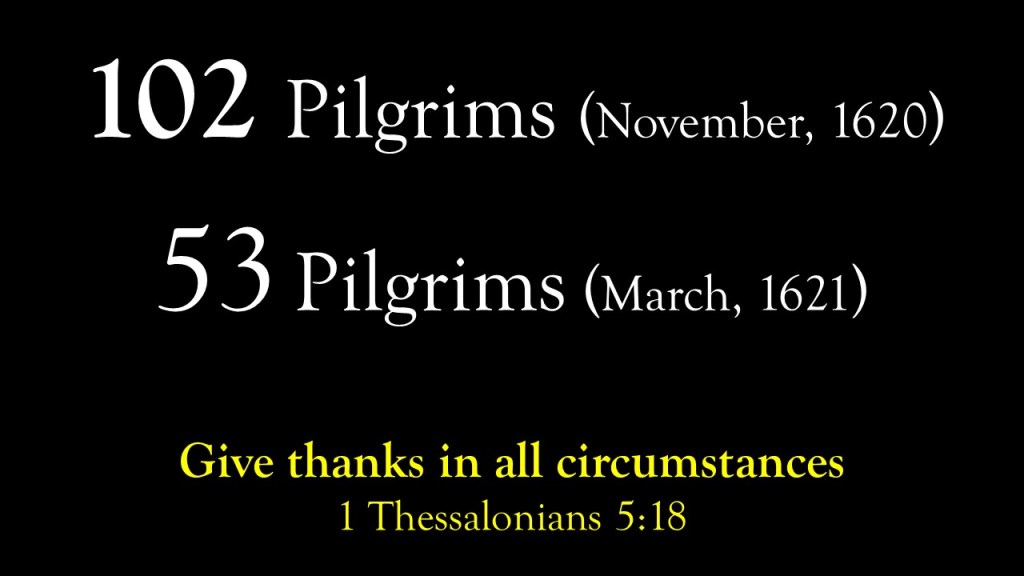
After ten arduous weeks crossing the Atlantic Ocean, the Pilgrims landed near the tip of Cape Cod in November, 1620. The group of 102 Pilgrims finally reached their destination: the new promised land! They were a little late, but they made it.
That first winter was deadly for the Pilgrims. Approximately half of the 102 Pilgrims died during the first few months.
There were 17 husbands…
10 died during the first infection.
There were 17 wives…
only 3 were left by February.
By the spring, only 53 Pilgrims were left to continue the dream of starting a new life in the Americas. Was it worth it? If they would have known that 49 men, women, and children would die and only 53 would make it, would they have still made the journey?
I believe their answer would have been a resounding yes. The Pilgrims did not press towards this new land for riches, fame, and power. Their reason had a divine purpose. While it is true that they were discouraged from the hard life they had in Holland and they were concerned that their children were being drawn away by evil in the extravagant lifestyle of so many Europeans. If you would ask each of the 102 Pilgrims why they were willing to risk their life for such an endeavor, this would be their answer:
“We want to advance the gospel of the kingdom of Christ in the remotest parts of the world.”
The Pilgrims sailed upon the Mayflower across the Atlantic Ocean. This was the Mayflower Compact. When is the last time you have read it?

In the name of God, Amen. We whose names are underwritten, by the loyal subjects of our dread sovereign Lord, King James, by the grace of God, of Great Britain, France, and Ireland king, defender of the faith, etc.
Having undertaken, for the glory of God, and advancement of the Christian faith, and honor of our king and country, a voyage to plant the first colony in the Northern parts of Virginia, doe by these presents solemnly and mutually in the presence of God, and one another, covenant and combine our selves together into a civil body politick, for our better ordering and preservation and furtherance of the ends aforesaid; and by virtue hereof to enact, constitute and frame such just and equal laws, ordinances, acts, constitutions, and offices, from time to time, as shall be thought most meet and convenient for the general good of the Colony, unto which we promise all due submission and obedience. In witness whereof we have hereunder subscribed our names at Cap-Cod the 11 of November, in the year of the reign of our sovereign lord, King James, of England, France, and Ireland, the eighteenth, and of Scotland the fifty-fourth. Anno Dom. 1620.
In the NAME of God.
By the GRACE of God.
For the GLORY of God.
ADVANCEMENT of the Christian faith.
This was the motivating principle behind the perseverance of the Pilgrims. They were willing to risk even their own lives to advance their faith for the glory, grace, and name of God.
The long, sad winter passed and spring arrived. One day, a Native American walked into the Pilgrim settlement. The children were terrified at first because they had been warned of the violence from some of the tribes. But this Native American smiled at them and said, “Welcome.” His name was Samoset and he was from the Wampanoag tribe.

The Pilgrims asked Samoset many questions and they gave him presents to show how much they appreciated him and wanted to live in peace. Samoset left the settlement, but then came back later with another Native American named Squanto. Squanto spoke even better English.
Squanto seemed drawn to the Pilgrims and helped them in many different ways. He showed them how to survive in the wilderness: how to hunt for deer, were to find berries and nuts, and how to plant corn. Squanto explained to them that by placing fish in the ground when they planted the corn see would create a more nourishing soil.
The friendship between the Pilgrims and Native Americans grew during the first year. Fast forward to November, 1621. Several Pilgrims were hunting for food for a harvest celebration. The Wampanoag tribe heard the gunshots and alerted their leader because they thought that the Pilgrims might be preparing for war. After realizing that the Pilgrims were merely hunting deer, the leader sent some of his own men to hunt deer for the feast.

The 53 Pilgrims who survived celebrated their colony’s first fall harvest with 90 Wampanoag Native Americans. The feast lasted for three days. The menu for the first Thanksgiving meal was most likely this:
Deer.
Corn.
Lobster, mussels, oyster, eel.
Vegetables: onions, carrots, beans, spinach, lettuce.
Turkey (maybe).

They played various games, sang, and danced.
Enthusiastic joy was found at the first thanksgiving more than four hundred years ago. The Pilgrims had made it through the hardest year of their life, and that was worth celebrating. And no doubt the Pilgrims were hoping to share with their new Native American friends the truth about Jesus dying on the cross to save all of humanity from sin. Let us never forget why we are here on this planet. No matter what difficulties might come our way, we can “give thanks in all circumstances; for this is God’s will for you in Christ Jesus” (1 Thessalonians 5:18).
Spend a moment this Thanksgiving break talking about your “low” moments and “high” moments from this past year with your loved ones. And make sure you give thanks to your God for sustaining you daily with His goodness.
Give thanks to the Lord,
for He is good;
His love endures forever.
1 Chronicles 16:34
I keep having flashbacks. The other morning, I was laying in bed starting to “wake-up” and my mind formed a picture of my mom laying in the hospital bed. She was sick with stuff hooked up to her body. This image disturbed my heart. I was a bit shaken by the flashback because my mom’s sickness was a traumatic experience for my family.

This flashback was vivid. Briefly, I forgot that I was actually laying on my bed in my own home. My mind traveled back to one of the worst periods of my life. The trauma occurred over a duration of 112 days. The daily doctor’s reports. The good news and then bad news. Knowing my mom was fighting for her life, confined to her hospital bed.
Trauma takes shape in many forms: years of abuse, months of divorce court, weeks of bullying, hours of a still-born childbirth, seconds of an accident.
One cannot measure trauma simply by how long or short the event. The intensity of the moment might affect future flashbacks, but so can the longevity of the undesirable circumstance in your own personal history.
My flashback felt so real because it produced a high level of stress within my body. My heart was pounding and my muscles were tensing up as if I was reliving this tragedy again. The hormones that coursed through my veins after I heard “bad news” about my mom in the hospital were the same hormones I was experiencing laying on my own bed.
Have you ever wondered why you get flashbacks of traumatic events? I have discovered that my mind is still learning to cope with seeing my mom in a hospital bed for almost four months. Maybe my mind repressed these thoughts for a later time when I would be more prepared to deal with them.
That “later time” was last week. How do I handle a flashback like that? It was painful to visualize my mom suffering. I don’t want my mind to be transported back to this horrible period of my life. It seems that my mind needs healing from these events. Maybe your mind needs healing from a similar event?

I reminded myself at the end of the flashback that it was in the past. It felt real and I hated the way my body responded. Throughout the day, I kept thinking about this disturbing moment. My heart was filled with anxiety, that is, until I went to Christ and asked Him what I should do with this unsettling feeling. I could hear a gentle whisper say to my heart, “Read Hebrews 12:1-3.”
I opened my Bible and read the first three verses of Hebrews 12.
Since we are surrounded by a great cloud of witnesses, let us throw off everything that hinders and the sin that so easily entangles. Let us run with perseverance the race marked out for us, fixing our eyes on Jesus, the pioneer and perfecter of faith. For the joy set before Him He endured the cross, scorning its shame, and sat down at the right hand of the throne of God. Consider Him who endured such opposition from sinners, so you won't grow weary and lose heart.
After studying these verses, the Lord gently told me that I need to focus on three truths in order to heal my mind from these flashbacks.
Truth #1: My mom is a part of the CLOUD of WITNESSES now.
The cloud of witnesses is an extension of all the men and women of the faith in Hebrews 11. Noah, Abraham, Sarah, Joseph, Moses, Rahab, Samson, David and many more were all commended for their faith and now make up this heavenly cloud of witnesses. But the cloud does not just have “Bible people” in it. Every Christian who has died is now in the cloud, witnessing God’s glory.

When you attend the funeral of a Christian, you can be assured that they are fully glorifying God in heaven and are very interested in what is happening to you on earth. This does not mean that they are always watching us, for they have many exciting new opportunities in heaven. But they are invested in your life here. They are rooting for you! They want you to also become a part of the cloud of witnesses.
God helped me combat my flashback by supplying me with Scripture that helped me look forward. Forward to what is real, not the past.
My mom laying in a hospital bed is not reality anymore. What is true about my mom now? She is not suffering anymore. She is making new friends. She is watching my family and the events of the world. She is one of my biggest champions in heaven! Knowing this helps heal my heart.
Truth #2: It’s now my turn to FINISH my race.
My mom has finished her race. Her race was approximately three-fourths of a century. My race might be half over, or maybe I haven’t even gotten to the back nine yet. No one knows when they will breathe their last breath. But someday, each of our races will be finished. And we will be able to look back and ask ourselves, “Am I satisfied with how I ran the race? Did I give God my all? Is God happy with my life?”
I don’t think there is anyone who arrives at the gates of heaven that will be completely satisfied with his or her race. Noah wished he wouldn’t have gotten drunk. Abraham hated that he lied so much. Sarah wished that she wouldn’t have doubted God. Moses regretted murdering a man. Samson bemoaned his weakness for women. And those are only the sins we read about. The so called “heroes of the faith” had many flaws and sinned much more than they planned to when trying to follow God.
That is why it is called “finishing the race” and not “running the perfect race.” So, how can we finish the race? Two verses hold the secret:

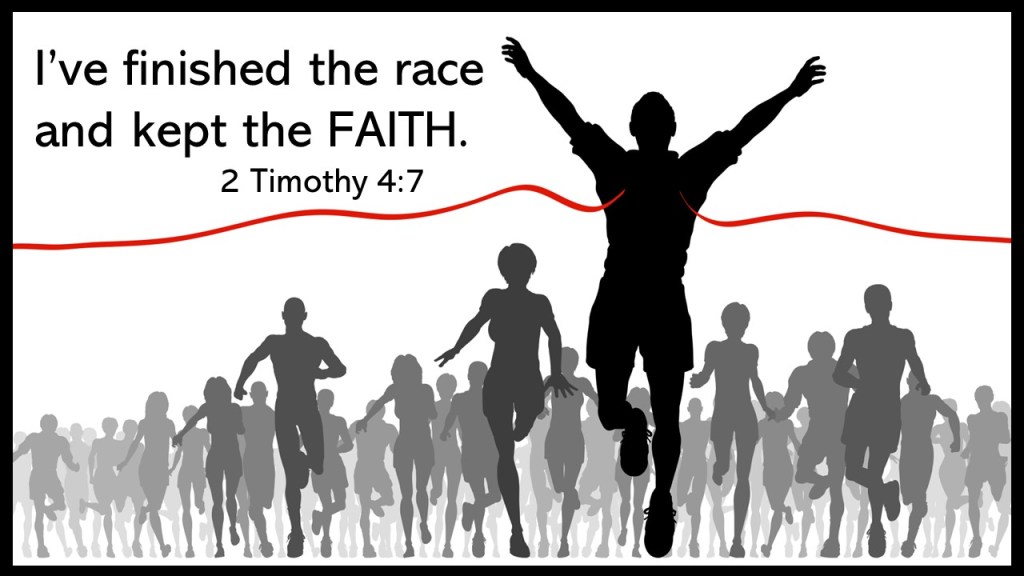
We want to get the prize. That prize is the ability to keep the faith. In the darkest days of her life, my mom kept the faith.
The hardest and yet most wonderful conversation I ever overheard between my dad and mom took place right before the doctors placed her on a ventilator. I was sitting in my living room. My dad was standing a few feet away from me holding his phone out so that I could hear my mom on “speaker.” The following is the dialogue as precisely as I can remember.
Mom: “I love you and love all my children and all my grandchildren. Please tell them all how much grandma loves them.”
Dad: “I will. You will get through this.”
Mom: “If I get through this, I will see you at home. But if I don’t, I will see you in heaven.”
Dad: “You will get through this.”
Mom: “I need you to know that if I don’t get through this, I will see you in heaven.”
She is now in heaven. Her prize is Jesus Christ. But she isn’t there because she was a great mom and grandma. There is no such thing as a “saint” who deserves heaven. After people pass away, we often do a disservice to those trying to grasp how we can actually get into heaven by turning those who lived an overall selfish life into a saint. We have all “raised our eye brows” listening to someone paint a perfect picture of a deceased person who was anything but a saint. While my mom was a super person, she was ushered into heaven because she accepted the gift of salvation.
Probably more than twenty years ago, my mom was vulnerable with me. Towards the end of a Sunday afternoon lunch, she shared that she didn’t always feel saved and often doubted that she will go to heaven when she died. Sadly, she grew up in a church that taught a subtle “saved by works” mentality instead of a “saved by grace” reality. We talked for awhile about what it meant to be saved by grace and how it was never based upon anything we could do past, present or future in our life.
I believe that was a defining moment in my mom’s spiritual life. She had been taught for decades that we might forfeit our salvation if we get too many things wrong as we run the race and will be left out of heaven. But little by little, year after year, over that twenty-year stretch, my mom would hear the teaching of “grace” at her church and by the end of her life, she didn’t have to fear at all where she was headed because she was convinced that Jesus was holding her safely in His arms and there was no one and nothing that could snatch her away.
In the last chapter of her life, my mom realized what genuine salvation was and how we are truly saved by the grace of God. The last four lines of this song say it all:
Oh, when I come to die,
Oh, when I come to die,
Oh, when I come to die,
Give me Jesus.
My own race must be ran with an increasing awareness of God’s grace. I want to grow more secure in His mercy, compassion, and love. And so when I approach the final lap of life, I will have known that God has always been and will forever be the “starter” of my faith and “finisher” of my faith.
Truth #3: I can endure and persevere by FIXING my EYES on Jesus.
The last few months of her earthly race were painstakingly difficult. Almost unbearable at times.
When I get those flashbacks, I must remind myself that those four months in the hospital was a “light and momentary trouble” that achieved for my mom an “eternal glory that far outweighs everything” (2 Corinthians 4:17).
“Endurance is not just the ability to bear a difficult thing, but to turn it into glory.”
William Barclay
What I saw in that hospital room was temporary, but what was unseen is eternal. Knowing this truth, I fix my eyes on the unseen, not the flashback of my mom in that bed.
What does it mean for us, after any traumatic event, to fix our eyes on Jesus? It means calling out to Jesus to help your heart heal. For Jesus to sustain you with strength when you feel weak and you want to give in to the struggles of life. Jesus always comes through. This is how Jesus came through for me.
Seventeen hours had passed since I had the first flashback. I kept thinking about the flashback throughout the day and was trying to fix my eyes on Jesus. I repeatedly asked Him to heal my heart and wash away the pain of that picture in my mind.
Around 11pm, I did my normal “check on the girls in their rooms” before I turned in for the night. I walk into each of their rooms, shining the light from my phone in order to see their faces. After checking on one of my daughters, I turned to walk out of the room, and my flashlight shined on a picture on the wall. It was a picture of my mom with my daughter. I froze and started to tear up. I heard the Spirit whisper to me, “Fix your eyes on that picture and remember your mom in this way, with a big smile loving her grandchildren.”

This is the picture I have fixed my eyes on every night the last couple weeks before I fall asleep.
The sweetness of the Spirit filled my soul, and I could feel the anxiety melt away. For Jesus was right beside me, mending my broken heart.
Two times. I met my grandpa two times in my entire life.
A study from the Journal of Psychology and Behavioral Science found that more than 40% of those surveyed (ages 18-56) said that they had experienced some form of family estrangement during their life.
A severed relationship is beyond difficult when it includes relatives. If you’ve lived long enough, you’ve probably found yourself estranged from a family member. You can learn to live without this person in your life. But how do you handle the feelings of emotion that begin to flood you when you either hear of that person’s death or that they have little time to live?
How should you react? Should you act as if you are on good terms with this person? Should you avoid seeing them because God would understand? These are not easy questions to answer when someone who should be near and dear to you is distant and destructive to you.
I grew up with two amazing parents and three wonderful grandparents. All five of these individuals taught me what it meant to love and be loved by other humans. But my grandpa was different. He was selfish. Life centered around him.
He wasn’t just a bad grandpa. Before that, he was a terrible dad. Absent and self-absorbed, my grandpa eventually deserted his family back in the 1950s. He left his wife and six children. One of those children had down syndrome. My grandma was abandoned with six mouths to feed.

What my grandpa did was rotten. To the core. Who does that? Who “up and leaves” their family to fend for themselves? And this was in an age when almost all women relied upon their husband’s income. I’ve been told a few times over the years that my grandma was on the brink of a nervous breakdown because of all the stress and financial pressures of raising six kids. When I think about my grandpa, this verse comes to mind:
Anyone who doesn’t provide for their relatives, and especially for their own household, has denied the faith and is worse than an unbeliever (1 Timothy 5:8).
My grandma survived the first several turbulent years of “single motherhood”. The six children eventually grew up. One of those children was my dad. He was the opposite of his dad.
My grandpa was pre-occupied on his own stuff, my dad was ever-present with his children.
My grandpa worked so that he could buy himself a new car almost every year, my dad worked so that he could pay for his children’s college.
My grandpa ended up leaving his family, my dad is the glue that holds his family together.
My grandpa lost the opportunity to know his dozens of grandchildren, my dad daily hangs out with his grandchildren.
Two men from the same bloodline. Complete opposites. My dad is my hero. My grandpa was a villain. I don’t have any happy memories of my grandpa. Zero. I cannot think of one good moment with him. The last time I saw him, I was eighteen years old. And after spending a little time with him, I left feeling like he didn’t want us to ever come back again. He closed the door on any potential relationship with us.

I was okay with never seeing him again. But I had some deep bitterness and hatred hidden in my heart towards him. I despised what he did to my grandma. I loathed how he abandoned my dad, three aunts and two uncles.
Then one day he died.
Several years had passed since my last encounter with him at age eighteen. My dad called and shared the news with me. I didn’t feel emotion. He might have been my biological grandpa, but he was a stranger to me.
My dad asked if I would like to officiate my grandpa’s memorial service. I immediately said,
“Nope.”
I shot back a response that now seems careless: “Why are you even having a memorial service for him? He doesn’t deserve it.”
My dad told me he understood my position and respected it and would let the rest of his family know that they would need to find someone else to lead the memorial service.
I regret saying,
“Nope.”
Many years have passed since his death. I genuinely wish I would have handled this differently.
Looking back at my younger self, I wish I would have had more wisdom and compassion for the events that were unfolding. I allowed bitterness, hatred and self-protection to direct my thoughts and words. And I regret it.
I wish I would have looked into the hearts of my dad, aunts and uncles and saw that they needed a time to heal from all the pain from their past. I could have stood before them and helped them work through those feelings and guided them towards closure.
I wish that I could have still loved my grandpa even though he never showed an ounce of love to me. I could have shared with the small crowd that God loved grandpa and created him in His image and that grandpa’s life is a perfect picture of why we all need grace.

I wish I would have gone to the memorial service and hugged my grandma and thanked her for fighting hard for her family. I would have encouraged her that she was the most amazing “single mom” I have ever met.

We call this the picture of BLESSING. My grandma (age 98) was tenderly interacting with my youngest daughter (age 2).
But I didn’t do any of those things. And I regret it. I’ve never understood people who say that they have “no regrets” in this life. I was watching a documentary on a famous singer the other day. She had been popular in our culture for approximately twenty years and had been through several difficult times in her life, mostly because of her immature actions. The interviewer asked her if she would have done anything different in her 20s or 30s. Her answer was no. She stated that she had no regrets. Really?
I sure have regrets. There are certain events I wish I could turn back the clock and do differently. But life doesn’t work that way. I wish I would have honored my grandpa even though he didn’t deserve it. He deserved avoidance and ridicule, and so that is what my grudge-filled heart gave him.
I should have learned a lesson from my dad. Did you know that my dad never spoke derogatorily about my grandpa? He could have complained about how hard his dad made his past. But he never blamed his old man for having to work at an early age to help put food on the table after his departure. My grandpa made my dad’s life so much harder than it needed to be, but I never sensed any kind of unforgiveness.
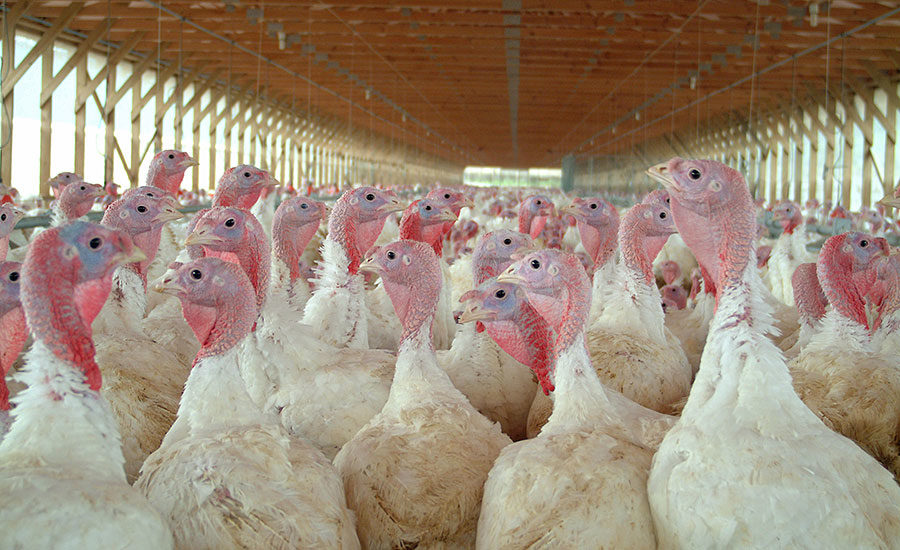
One of my dad’s jobs was getting up at 4:00 a.m. to load turkeys into a truck before school each morning. He said it was “the worst” if it rained (wet feathers)!
I am convicted to the core of my being that my dad was one of the best “husbands-fathers” to walk the planet because he RELEASED the POISON of his own father’s past.
My dad was NOT CHAINED to his dad’s despicable shortcomings. My dad didn’t try to dig deep to get all the answers about why his own dad was rotten. I have seen too many people try to find an answer that doesn’t exist. You can torture yourself over why someone did what they did, but in the end you’re right where you started.
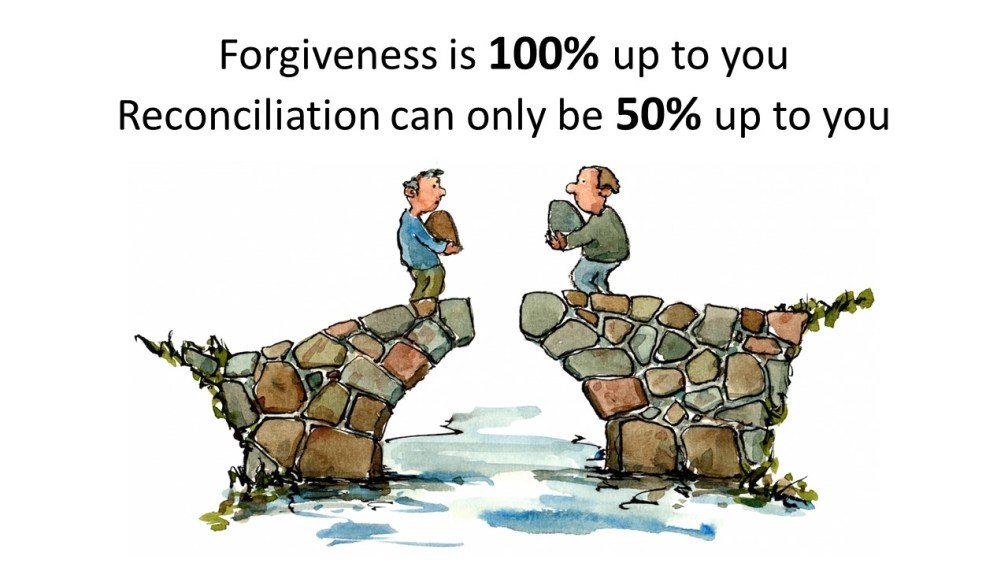
The ability to show care, concern and compassion to a family member who doesn’t deserve it lies exactly upon whether or not you are willing to forgive that person of whatever wretched sin they committed in the past (or even how they are acting in the present). Fixing a relationship takes two people, but forgiving only takes you. Don’t bottle up all of your hurt, instead pray to your heavenly Father so that He can heal your wounds.
Don’t set such high expectations of them that you are devastated when they fail you.
But you might ask, “What if they are already dead?”
You can still forgive him or her. You can still soften your heart to whatever the Lord wants to teach you.
Life is too short to hold onto bitterness and resentment. We might think that these emotions are necessary, but they are keeping you from becoming the person God wants you to become.
Be determined that you will not act like them. But don’t think that you are better than them and that you would never stoop to their level of living. Satan will sniff out that pride and lay a trap for you to fall into some of the same problems that you hate about someone else.
There are some relationships that will never “get fixed” in this lifetime. What will you do when death knocks at your door and after walking around in heaven for a few days you see someone that surprises you? You will walk up to them and give them a hug. That’s what you’ll do. Because God has reconciled all things to Himself.
If my grandpa is in heaven, I will embrace him when I see him someday. Not because he deserves it. But because I will be completely filled with the perfect love of Christ. And he will also be made perfect in Christ’s love. And he will have an eternity to be a much better grandpa.
The most powerful thing you can do for your mind and heart when you are struggling with an estranged person is to picture that moment in heaven when you both lock eyes with each other. If they aren’t in heaven, then you won’t have to face them. But if they are, God will have made all things new.
New beginnings and second chances…that will be one of the best realities of heaven.

We might be surprised at who we see in heaven. But why should we be? Jesus seemed obsessed with inviting sinners into His kingdom and He made the path to salvation simple, sure and filled with amazing grace:
"In Him we have redemption through His blood, the forgiveness of sins, in accordance with the riches of God's grace" (Ephesians 1:7).
My mom lived 27,341 days. She was born in 1947, just a few years after World War 2 and at the start of the baby boom. No one, except God, knew the day of her death.
Have you ever added up the number of days that you have lived?

You might be wondering, “Why does this matter?” God tells us the humans live about 70-80 years on this planet (Psalm 90:10). The average human life span is approximately 78 years. Three thousand years ago God predicted how long each human will live.
Some humans will live longer than 78 years, while others will die far sooner than this age. The Bible teaches us that if we live at least 70-80 years on this planet, we should consider ourselves blessed. Back to the question: “Why does this matter?” In this same Psalm, God commands us:
Teach us to number our days that we may gain a heart of wisdom (Psalm 90:12).
In other words, we are to count our days in order to make our days count. If we never take the time to pause and think about how precious our time is on this planet, then we will waste too many days, hours, minutes and seconds with thoughts and actions that do not matter.
How many days have you lived? How many do you have left? You might not know the exact number of days you have left, but if you are sixty years old, you must come to terms that you have lived more days already than what you have left. The older you get, the more you should count your days, because each day becomes more precious.
I am going to admit something that I haven’t shared until now. You are the first to hear of this. When we are going through difficulties and we desire God to help us, we bargain with Him. We make a promise to God in exchange for something we want. It is common for humans to engage in this kind of negotiation with God.
During the days that my mom was in the hospital, my main prayer was for her to heal and get back to her normal life. Several weeks into her sickness, I started to pray for my mom to receive five extra years. My logic was simple: I could handle her dying at age 80, but age 75 seemed too soon. Of course, I would love to have seen her live to be a 100, but I didn’t want to get greedy.
I wanted another five years with my mom. I wanted her to walk this earth 1,825 more days. That doesn’t seem like too much to ask. I wasn’t asking for five thousand. Just a little less than two thousand days.

I thought about how God added fifteen years (5,475 days) to King Hezekiah’s life when he was ill (2 Kings 20:6) and rationalized in my mind that asking God for only five years was not too much to ask. I prayed this prayer silently, hoping that God already had plans to extend my mom’s life.
One moment when I was gripped with the fear of losing her, I called out to God and gave Him permission to take five years off of my life so that she could have those five years that were for me. I was willing to trade five years at the end of my life (not knowing when that would be) for just five more with my mom. If God would have granted this request, I would have had five more years with my mom here on this earth and would then get to see her in heaven five years earlier. But it just doesn’t work that way.
I was trying to bargain with God.
But man has no leverage to use in order to change God’s plan. I have been a pastor for twenty years, I’ve been to seminary, I know correct theology. I should have known better than to ask God to trade a few years of my life for a few years of her life. I should have been more mature in knowing that this was not the right prayer to present to God. But in the midst of my weakness, I tried to negotiate more time with my mommy.
I don’t think my desperate prayer offended God or made Him gasp with surprise. He could see within my heart that I longed for more time with my mom. It was so hard to see her unhealthy and helpless on the hospital bed for several months.
If God would have granted me one more day with her when she was healthy, how would I want to spend it? I sometimes wish I could have just one more day with my mom.
One more day sitting on the beach in Florida.
One more day riding bikes around Mackinaw Island.
One more day riding in the parade with all the grandkids.

One more day eating cashews in Brown County.
One more day attending my daughter’s basketball game together.

One more day eating Sunday dinner at the homestead.
These “days” will never happen again. She is in heaven. I am on earth.
93 days. Since my mom’s death. Many of these days I have been filled with sadness that has a hard time enjoying the good things this life has to offer. Don’t get me wrong, I still laugh and smile with others and I try to engage in fun activities, but there seems to be a cap on my ability to experience happiness.
I am about 75% happy in the moment when I know that I should be 100% happy. It seems that as soon as I am enjoying a moment, a memory about my mom enters my mind and creates an inner sadness. I am happy, but not totally.
This last week I was explaining this to one of my best friends over a subway sandwich. Over the last year, he had lost two loved ones to death. One older. One younger. He knew exactly how I was feeling, for he has worked through the same emotions. He gave me some good advice that I want to share with you that has actually helped me the last few days.
He said, “You have so many wonderful memories of your mom. She is in heaven now and you miss her dearly. Do you think she wants you to be overwhelmed with sadness, or do you think she wants you to find joy when you reminisce about her life? Your mom wishes you to take hold of these present moments of life and enjoy them right now. That would make her happy in heaven.”
I had not thought about that since her death. As she is watching me, she does not desire to see me overwhelmed with sadness, but instead to take hold of the moment and enjoy it fully. Her death reminds me the fleeting reality of this life.
Remember how short my life is (Psalm 89:47).

We are never promised tomorrow. On the morning of September 11, 2001, 2,763 people woke up not knowing it was their last day on earth. When I think about how short life is, I picture the World Trade Center and all the humans that perished on that tragic day. That is a day that shaped me. Make this day count. Count your blessings. Bless others while you can.
There is a time to grieve, and for the rest of my life, I will have a hurt in my heart for my mom’s presence, but if I allow the sadness to rob me of happiness for too long, I will be gone from this earth also and have many regrets of wasted days filled with melancholy.
Your life is like the morning fog—its here a little while, then it’s gone (James 4:14).
The words of my friend are working within my heart. This morning, as I opened my eyes to begin this day, this verse arose from my memory to the forefront of my mind:
This is the day the Lord has made, let us rejoice and be glad in it (Psalm 118:24).
As a young kid, I memorized this verse. As an adult with more than 16,000 days to my credit, the Holy Spirit knew that I needed to be reminded of this truth in the early morning.
God has made this beautiful day. This day will be over quickly. Will you rejoice and be glad in it? Or will you waste it? The choice is yours. For me, I choose to be glad today. Fully in the moment.
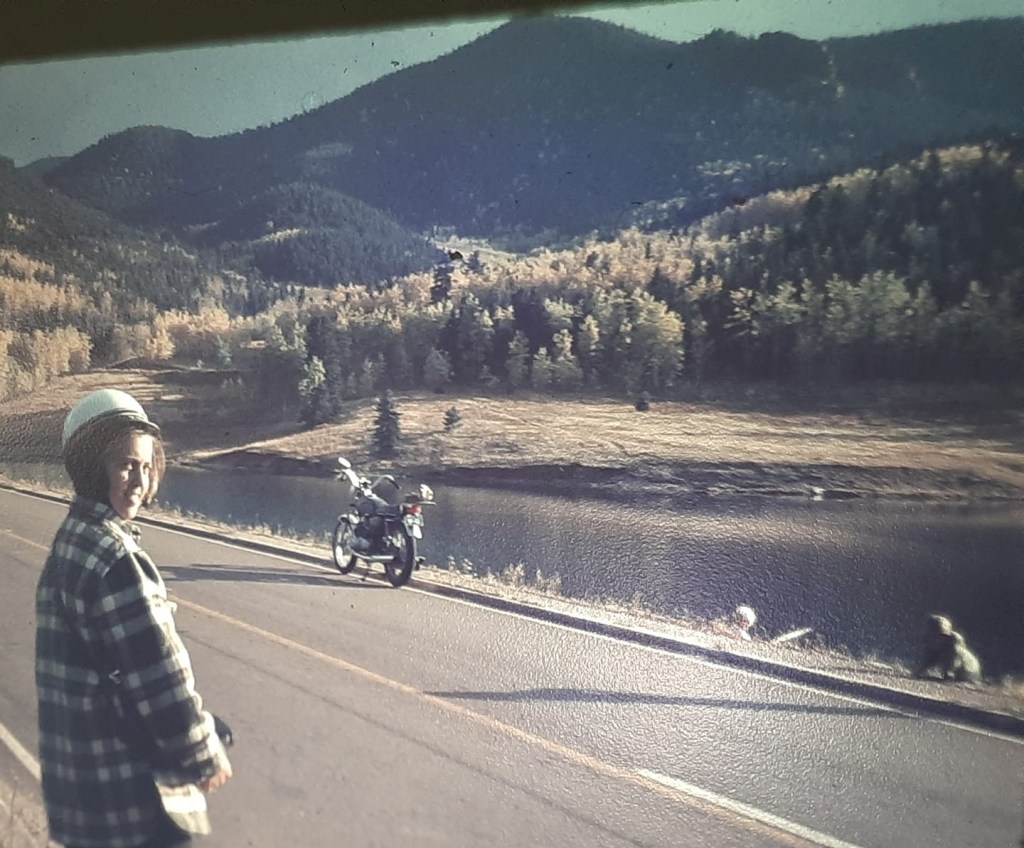
My mom became less daring the more she aged. But in her younger years she rode a motorcycle, hiked mountains and moved across the country to a town filled with only strangers. Maybe she became more cautious because of her children and grandchildren. This picture shows my mom’s thirst for adventure. We all have this desire deep inside us. And in heaven we will explore with exhilarating enthusiasm for all of eternity.

Before we look at #6, #7 and #8, allow me to recap from part 1…
#6 – We will be given the KEYS to our new HOME.
Jesus was a carpenter in His earthly job, and in heaven He is also a builder. The night before Jesus died, He promised His disciples a future home in heaven:

My Father’s house has many rooms; if that were not so, would I have told you that I am going there to prepare a place for you? If I go and prepare a place for you, I will come back and take you to be with me that you also may be where I am (John 14:2-3).
We will have our own place in heaven just as we have our own place here on this earth. I am not sure if we will all have the same size house or if some will be much larger than others or if some people will live alone while others will live together. Those details are not known. But we do know that Jesus is preparing a place for us to dwell.
The first day we are in heaven, I believe we will shown our new home. God has been waiting for this moment your entire life and is excited to give you a brand new house. Most likely, you’ve never been gifted a house, but for each of us, we will feel the tremendous love of our Father when He presents this incredible gift to us.
We will finally be home.
Have you ever been gone on a long road trip and finally settle back into your home? What is that feeling like? It is a great feeling. You can relax. You enjoyed the trip, but there is no place like home. It is hard for us to completely comprehend this feeling right now, but someday you will realize that you are home when you step through your eternal house. The sense of safety, security, fulfillment and belonging will someday overwhelm your heart. You were made for this place.

God is preparing a “place” for you, and the feeling of being home will be more than simply a physical building. The reunion of loved ones in heaven will be tremendously satisfying.
Tears of joy will fill your eyes as you run up to your grandmother who has been in heaven for thirty years.
Laughter will burst forth from your mouth as you embrace your brother who lost his life to cancer ten years before you.
Babies who entered heaven because of a miscarriage will run to their mothers in their heavenly bodies.
You will meet your ancestors who traveled across the Atlantic to give your family a new life in the Americas.
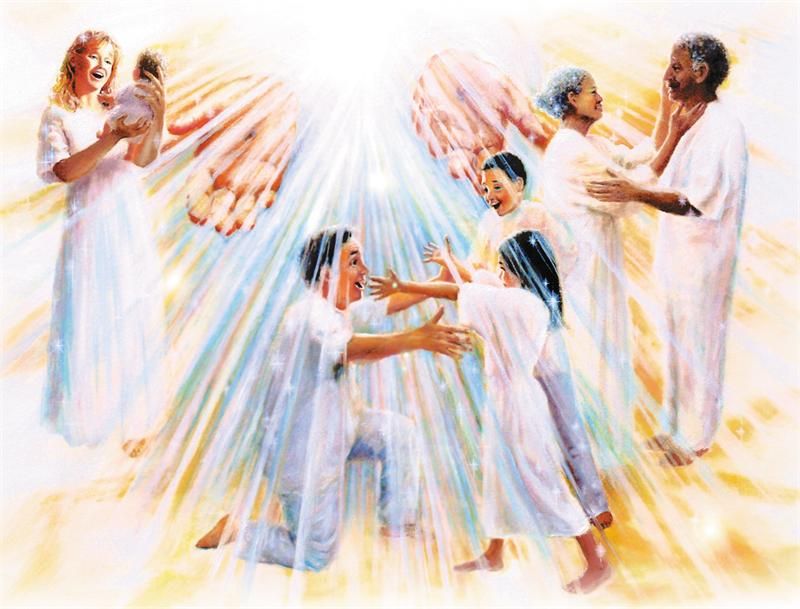
Some say the “key” to happiness is finding lifelong friends. When we get to heaven and Jesus gives us the key to our new home, this “key” will give us access to family members and friends we loved so dearly on this earth. Each of these individuals will now be available for us to interact with forever and ever. How I long for that access to my grandparents, my daughter Clare, and my mom.
They say “home is where the heart is” and so that moment we meet all of those precious people in heaven, we will feel complete and whole for the first time. The aching I have in my heart to hear my mom’s voice once more is deeper than I could have ever imagined. I miss her voice so much that about once a week I will open the voicemail on my phone where a past message is saved from my mom and I will listen to it just to hear her sweet voice. Sometimes I will replay her voicemail over and over. I don’t want to forget her voice.

Heaven will be home not because of the amazing houses. Heaven will be home because of Jesus. And our family. And our friends. And the new people we will meet!
#7 – We will be PERFECT.
As a child, I had a fear of heaven. I wanted to go there instead of hell, but I was worried that after thousands of years I would get bored. I even had dreams of trying to end my existence in heaven because of the excruciating boredom. But something I didn’t consider when I was younger was this: only perfect people are in heaven.
What does it mean when the Bible refers “to the spirits of the righteous made perfect” (Hebrews 12:23)?
Perfect means to be complete, without sin, mature, fulfilled. Paul describes this perfection in 1 Corinthians 15:42-44. He compares and contrasts our temporary body with our resurrected body.
Earthly body is born to die, but our heaven body will live forever.
Earthly body is born in dishonor (sin), but our heaven body will be glorious (without sin).
Earthly body is born in weakness, but our heavenly body will be powerful.
Earthly body is born natural, but our heavenly body is spiritual.

Our brains will think at full capacity. Our bodies will never get tired. We will never want to engage in sin again. We will only speak life-giving words. Our hearts will never again feel pain, remorse or agony. Try to picture some of the most amazing moments in your life when you felt very much alive. That is a glimpse of what heaven will be like. Only heaven will be better.
When we enter heaven, God “will transform our lowly bodies so that they will be like His glorious body” (Philippians 3:21).
The ultimate act of love from our Creator is that He wants us to be just like Him. So, as you age and your body and mind begin to break down, just remember that God will change you into the most beautiful person you have ever known. You will be totally satisfied forever because of His completed work in you.
#8 – We will be REWARDED for our WORKS as a Christian.
Many times throughout the New Testament, we are taught that God will reward us in various ways. I have heard many Christians tell me that they don’t care about this part of heaven. “I just want to get there,” they say. But if it wasn’t important, the Bible wouldn’t focus upon it constantly. Jesus explains to us that there will be rewards:
I am coming soon! My reward is with me, and I will give to each person according to what they have done (Revelation 22:12).
In the last few verses of the Bible, we are given the promise of being rewarded. Let me make it clear that it is not to determine whether or not we will be allowed into the heaven. Our salvation will be secured because of our faith in Christ. But we will stand before the judgment seat of Christ and be repaid for how much or how little we did for Jesus on earth (2 Corinthians 5:10).
Here is a short list of several rewards:
crown of life
treasure
crown of righteousness
crown of glory
(c.f. James 1:12; Luke 12:33-34; 2 Timothy 4:8; 1 Peter 5:4)
I am not sure what the rewards will look like, but just as we are rewarded here on this earth for good works, there will be a heavenly satisfaction that will far outlast any earthly pleasure we enjoyed.
As we stand before Jesus, He will display for us how we impacted the earth for eternity. We will see the young, single woman with two kids we came alongside and mentored. We will cry tears of joy as we are approached by a man who was saved because of a testimony we gave at a church event. We will shout “hallelujah” when we notice an agnostic friend who became a believer because we were able to prove the reliability of Jesus’ resurrection. We will be overwhelmed with gratitude that we sent money to buy Bibles because an entire tribe from Africa became believers because they received God’s Word in their own language.
We will be pleasantly surprised that our relational proximity to our Savior in heaven was based upon how seriously we took Jesus’ commands on earth. But Christians who lived selfishly to build their own earthly success for their own personal gain will realize IT WAS NOT WORTH IT.
If what has been built survives, the builder will receive a reward. If it is burned up, the builder will suffer loss but yet will be saved—even though only as one escaping through the flames (1 Cor 3:14-15).
Many Christians believe that these rewards will not be significant because “we will cast our crowns before the throne of God” (Revelation 4:10) when we are in heaven.

But this does not mean that we are throwing the rewards away. We are returning the thanks, the worthiness, the value of what a great God we served on earth. Otherwise, why hand out rewards if the treasures will be tossed aside.
The THINGS God has PREPARED. In closing, it is important to remind ourselves that we have a limited view of the realities of heaven. We know some things, and that helps us take comfort whenever a beloved believer dies, but we also need to take into account this truth:
What no eye has seen, what no ear has heard, and what no human mind has conceived—the things God has prepared for those who love Him (1 Cor 2:9).
Here is what I know for sure: God is preparing an indescribable place for those who love Him. I love Him. Do you love Him? I pray that your answer is a resounding, “Yes!”
When is the last time you’ve thought about what happens after you die? Physically. Mentally. Emotionally. Spiritually. If we are only physical creatures without any immaterial aspect to our existence, then there is only one thing that happens when we die. But if we are complex beings, made of both temporary and eternal elements, then we should spend a moment considering the potential of an afterlife.
#1 – Our body dies and DECAYS.
Death is often defined as that moment our heart and brain stop. When my mom’s heart stopped, the doctor checked her pulse and declared her deceased.

As the heart ceases to pump blood, the brain shuts down, the body grows pale and begins a cooling process.
Over the next several hours, rigor mortis spreads throughout the entire body. The body has no more purpose in this life. No more talking, walking, running, kicking or eating. The body is finished. Solomon speaks of what happens at death: “the dust returns to the ground it came from” (Ecclesiastes 12:7).
Depending on how and where the body is buried (preservation, weather, etc.), the body could decompose into a skeleton within weeks or decades. My mom was placed into a coffin. Amazingly, the process of decomposition is quite long for someone laid to rest in a coffin. It could take fifty years for the body’s tissues to liquify and disappear, leaving behind mummified skin and tendons. Eventually the skin and tendons will also disintegrate, and after eighty years in the coffin, the body will be in skeleton form. After a hundred years, the last of the deceased bones will have collapsed into dust. Only the most durable part of the body, teeth, will remain.
That is what happens to our physical body when we die. But is this the end? Is there something inside the human body that lives on after the grave?

Just as Solomon explained that the body will eventually return to dust, he gives us hope that “the spirit returns to God who gave it” (Ecclesiastes 12:7).
We have much evidence from the Bible that our spirit will exist far beyond death. Just as we spend time thinking about what happens to our physical body when it dies, it is vital that we consider what happens to our spirit when our bodies are finished. What can the Christian hope for when he or she breathes their last breath on this earth?
#2 – ANGELS carry you to heaven.
Jesus told us a story about a man named Lazarus who died and was carried to heaven by angels (Luke 16:22). We are not told how long our journey is to heaven.

The moment we die, we might instantly be in the presence of Jesus in heaven. On the other hand, our spirit might fly with the angels for a multitude of miles to heaven.
Maybe we will fly past planets and stars, through galaxies and the entire universe before we arrive at heaven. This might take several minutes, instead of being immediate. Could it take a few hours? We have no idea, and in many ways it does not matter.
Heaven is not here on this earth as it was during the early days when Adam and Eve were sinless. Heaven is “out there” somewhere and we are told that the only way to this paradise is through Jesus Christ (John 14:6).
#3 – You see the glorious SIGHTS of heaven.
When Stephen was near death, God gave him a glimpse of what heaven looks like (Acts 7:59). As your spirit enters heaven, you will initially see Jesus and the glory that has been awaiting you. Here are just a few awe-inspiring things you will notice (from Revelation 21-22).
The holy city, with an appearance of jasper, clear as crystal.
Massive, high walls with angels at all twelve gates.
The city streets will be pure gold, like glass.
Enormous pearls will be at every gate.
The river of life.
The tree of life.
You will see God’s face.
Try to imagine how spectacular this moment will be for every Christian. Your faith will become sight and you will see this glorious place that God made for your enjoyment for all eternity.
#4 – You hear the glorious SOUNDS of heaven.
The glory of heaven is not just about all the incredible sights, it also includes the new reality of absolute truth that will surround you in completeness.
This verse implies that there is knowledge in heaven that is too vast for our earthly brains to grasp. I am not sure how our new, heavenly minds will have this “inexpressible information” downloaded, but it will allow us to understand the mysteries of God to a fuller extent.

Right now, we only know part of the mysteries in this life.
The Bible addresses this reality:
We desire the complete story in the tragedies and complexities of life. Why did someone die in a car accident? Why do healthy people die of cancer in their forties and smokers live past their eighties? Why was I infertile, but all my friends were able to have children? Why does more bad stuff happen to me, but other people seem to have an easy, blessed life? Why did two of my children become Christians but the other one rejected the faith?
These are a few questions out of the countless that cannot be answered this side of heaven. I am not sure if God is going to answer every single question we have ever had in our experience on earth, but we are given the promise that our minds will become complete when we are in heaven.
#5 – You will be PRESENT with Jesus.
A man approached me after I conducted his wife’s memorial service. He is a Christian and has a deep, genuine faith as far as I can observe. He told me that his wife is now in a state of sleep and is awaiting the resurrection. He showed me a couple passages that seem to imply that Christians experience some sort of “soul sleep” when they die (Daniel 12:2; 1 Thessalonians 4:13-18). Since they are sleeping, the time will seem to have passed quickly, and when they are awakened, it will only seem like a few seconds. But it might have been hundreds or even thousands of years.
This is a popular view among some Christians. But when you consider the context of all Scripture, “soul sleep” does not paint an accurate picture of what happens when we die. The apostle Paul was confident that when he died, he would be with Jesus in heaven:
We are confident and would prefer to be away from the body and at home with the Lord (2 Cor 5:8).
The logic is clear: if I am in my body, I am still alive on earth and away from the presence of God. If I die and my body turns to dust, I am with Jesus Christ.
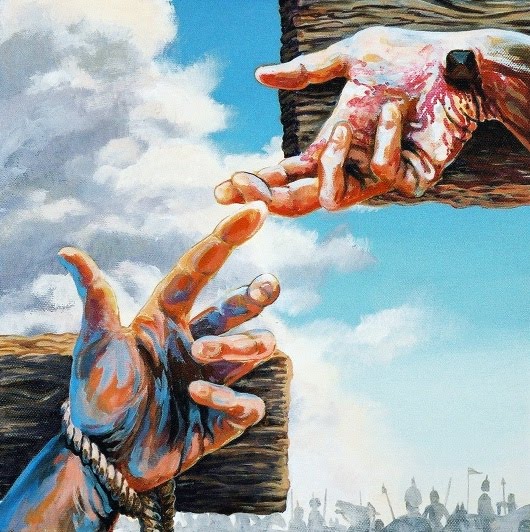
Let’s look at what Jesus said to the thief on the cross:
“Truly I tell you, today you will be with Me in paradise” (Luke 23:43).
The key word here is TODAY. In the present moment, not at a later time.
Did this thief deserve heaven? Absolutely not. But that is why we are saved by grace. The thief simply called out to Jesus for salvation and received it. The thief didn’t soul sleep. He didn’t have to deal with his past sins in purgatory. He was made righteous the moment he called upon Jesus and at his death immediately went to be with Jesus.
Now that we have made clear that we will be in the presence of Jesus after our death, it might be appropriate to think about what that will be like.

Every year, more than 50 million people die throughout the world.
That means that on an average day, more than 150,000 breathe their last breath.
Over 6,000 per hour.
More than a hundred a minute.
Every second, at least one person dies.
What does this have to do with our interactions with Jesus?
Have you ever considered how many of those people who die are Christians? Estimates say that there are about one billion Christians on planet earth out of about seven billion people.
That is a ratio of 1 of 7.
This number is probably high, because we are told that the way is narrow and only a few find it (Matthew 7:14). Let’s say the ratio is more like one out of twenty. If this is the case, then every single minute, there are at least five Christians entering heaven ready to see Jesus and walk around with Him and spend significant time with their Creator and Savior. Then, sixty seconds later, another five Christians are ready for their first interaction with Jesus. And then another five, and another five.

After only one hour, more than three hundred Christians have entered into heaven and all of them want Jesus’ attention.
Have you ever thought about the logistics of Jesus interacting with so many people at once as their personal savior in heaven? How will Jesus handle this? The Bible explains that He will interact with us personally. We are told that He will wipe away our tears, so He gets close to us in proximity.
And I am just discussing the new Christians here. What about all the others who have been there for a few days, years or centuries? Will they get any alone time with Jesus, or will everything be done in community? I do not have the answers to these questions, but I do know that God is able to do things that are very different from our limited mindset: “As the heavens are higher than the earth, so are My ways higher than your ways and My thoughts than your thoughts” (Isaiah 55:9). It will not be impossible for Jesus to meet with thousands of people at a time, and yet each of those people feel as if Jesus is only meeting with them. We cannot understand this mystery, but we know that God is good, and so this will also be good.
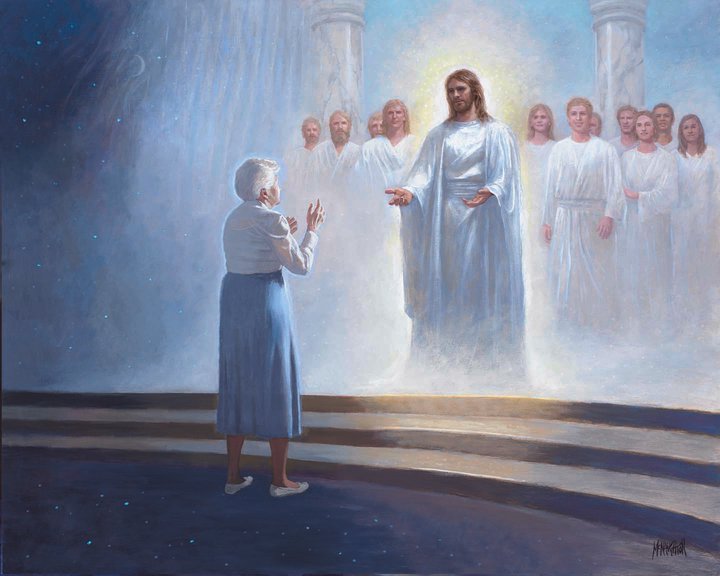
I am not sure exactly what it will look like to have our first interaction with Jesus, but I know that Jesus gave love, joy, peace, wisdom, attentiveness, compassion and hospitality to so many when He walked this planet.
It is impossible to describe how life-giving our friendship will be with God. It will be the best part of heaven. Just imagine every good quality in a human, and then exponentially increase those virtues, and you are starting to get closer to how incredible God will treat you in heaven.
Part 2 will continue next week with the final 3 things that will happen to us when we die…
I lost my GREAT GREAT UNCLE to a devastating accident 139 years ago. His name was Levi. He was only 23 years old when he lost his life.
Levi had his entire life in front of him. Little did he know that on April 22, 1883, he would encounter the worst day of his life.

Sunday. The day the accident happened.
When someone dies, have you ever given much thought to which day of the week they passed away? We often talk about how we want the date of the death of our loved ones to skip over holidays and birthdays because it creates a gloom over such special days. But we don’t get to choose when we die.
We rarely think about how death on a particular day of the week will affect us forever. If someone dies on a Tuesday or a Thursday there is no strong feeling derived from that day. But Sundays are different.
Sundays are for going to church. Eating a big lunch. Taking a nap. Playing outside. Enjoying the family. Resting under the willow trees as the wind spreads out the long branches.
Have you ever stopped doing something indefinitely because you found out about someone’s death as you were enjoying a particular event or activity? Once your heart connects a person’s death with something you love doing, often you lose the desire to continue with that life-giving pursuit.
I have a friend who refused to dine at a particular restaurant because he was eating there when he received the news about the death of his dad. He couldn’t overcome the image of that fateful day when he was in the middle of eating a cheeseburger. He left the juicy piece of beef on the table, rushed out of the building, and raced to the hospital. In his mind, the uneaten meal is still sitting on the table, waiting to be finished.
That Sunday was rainy, overcast, and gloomy. Typical spring Indiana weather. Levi and his eighteen-year-old sister Elizabeth were riding together in a horse and buggy to church. Elizabeth decided to pull out an umbrella and open it to shield them from the huge rain drops falling from the grayish clouds.
The simple act of expanding an umbrella spooked the horse.
The hoofed beast reared its front legs and bolted down the road and into the ditch.
The steep decline flipped the buggy sideways, throwing Levi from the safety of his seat.
A board fence abruptly stopped his motion.
Levi died from internal injuries three days later.
One morning Levi is a young, strong, energetic twenty-something. Later that week he is dead. How could an umbrella, horse, gravity and a fence be the recipe for death?
What a senseless tragedy.
Two individuals were riding the same horse and buggy on a rainy day. Why was Levi thrown from the buggy to his death at the age of 23? Why did Elizabeth receive the privilege of living 68 more years on this planet? She died at the ripe old age of 86. Something does not seem quite right. Life often seems intolerably unfair.
If I could sit down with Elizabeth and ask her about this accident, what would she have said? She carried the burden of this memory for almost seven decades. How many times did she ask “IF ONLY” to herself after this horrible day?
IF ONLY…I hadn’t opened the umbrella.
IF ONLY…the horse remained calm.
IF ONLY…it was me hitting the fence.
IF ONLY…Levi would have struck a soft patch of grass.
IF ONLY…

Have you ever played the game of “IF ONLY”? If you’ve played it, you have always been the loser. Playing this game will only send our mind into a dark place. Resist the temptation to dwell on all the different scenarios that could have changed the outcome of the tragedy
When our minds begin to think “IF ONLY”, combat these worthless thoughts with truth. Not one human is able to turn back the clock of time and change any event. Not one human knows or understands all of the variables that formulate a tragedy. It is harmful for your mind to spend too much time in the confusion of “why” something happened. You might understand a certain percentage of “why” but God knows every situation fully. We must consistently remind ourselves of this truth:
God’s ways are higher than our ways. He knew why Levi was thrown out of the buggy and died. That is high level despair. When we try to reach that high with our minds, our souls regress into a pit of misery.
I find it fascinating that the context of this passage in Isaiah includes rain.
Rain caused an umbrella to open,
which caused the horse to bolt,
and caused Levi to fly into a fence,
ultimately causing his death.
What caused Levi’s death? Rain? Umbrella? Fence?
The answer is… ONLY GOD KNOWS.
Fast forward from April 22, 1883 to April 28, 2022. The day my mom died. It has been difficult to make sense out of her death. A virus attacked her body.

A virus that has claimed the lives of 6,330,572 humans worldwide.
The virus is so tiny that we cannot see it with our eyes, but its destructive power has been felt in almost every family throughout our planet.
I’ve played the “IF ONLY” game a few times over the last few months.
IF ONLY…the virus never arrived in 2020.
IF ONLY…the virus didn’t linger for a couple years.
IF ONLY…she didn’t have a compromised immune system.
IF ONLY…the medication worked.
IF ONLY…God healed her lungs.
IF ONLY…
There is no winning this mind game. I must instead fill my mind with “whatever is true, noble, right, pure, lovely, admirable” (Philippians 4:8). During the aftermath of a tragedy, we must train our brains to think about what is excellent and praiseworthy.
When my mind wants to play the “IF ONLY” game, I instead will focus on these two truths:
#1 - The SECRET THINGS belong to the Lord (Deut 29:29).
#2 - The Lord is GOOD, a refuge in times of trouble. He CARES for those who trust in Him (Nahum 1:7).
God is both good and supernaturally powerful. If God is only good, but doesn’t have the intelligence or the strength to perform miracles, then He is not fully divine. If God is only higher than us without any compassion, then He is merely a heavenly dictator. But if God is caring, omnipotent (all-powerful), and omniscient (all-knowing), then we can TRULY TRUST in Him, no matter what tragedy we encounter.
When a man dies from an umbrella, I will trust in God’s goodness and knowledge.
When a woman dies from a virus, I will trust in God’s goodness and knowledge.
When you face a senseless tragedy, will you trust in God’s goodness and knowledge?

We all deal with the death of a loved one differently. When I shared the news about my mom’s death to my two younger daughters, they both reacted with diverse emotions. The timing was not ideal, because it was right after their soccer practice. As the three of us gathered in my F-150 pick-up truck, I delivered the devastating news.
This was the hardest thing I did after my mom’s death: deliver the news to my two younger children. My older two daughters were with my mom when she died, so they were able to process her death with me at the same time.

I had a hard time telling them because I was weeping heavily as I pieced the words together.
In response to the bad news, big tears streamed down my ten-year-old daughter’s face. But my seven-year-old asked, “You’re just joking, Dad. Right?” For several minutes, she refused to believe me. She kept repeating that I was only joking. Her response broke my heart even more, because she didn’t want to accept this as reality.
I assured her that I would never joke about something like this and I asked her to look at my tear-filled eyes as proof of grandma’s death. She started to tear up.
“Can I hug you two?” I asked. The three of us huddled and wept in my truck for several minutes. Grandma was dead, and we could do nothing about it other than cry and hug. And so that is what we did.
As I am writing this, it has been forty days since my mom’s death. I have felt many emotions and watched other family members work through their grief in their own unique way. But I have also noticed that some avoid this process of grief, and that will harm them in the future.
It doesn’t really matter how old or young you are, you must address your emotions if you are to heal and find health after the death of a loved one.
It is not my goal to take you through a grief cycle or a mourning process, because there are no clear action steps to feel whole again. Yet, by talking through a few feelings that flash within our hearts in the weeks after the death of a loved one, it will help you deal with some pain that you are experiencing or will encounter in the future.
In the past, I would bottle it all up and say to others, “I am doing fine.” When we bottle up our feelings and act as if “life goes on” and that “all is good”, we don’t give ourselves a chance to become whole.
We have noticed this with one of our daughters. She doesn’t want to talk about grandma’s death. She doesn’t want to look at pictures of grandma. She seems to desire a world where grandma never existed. In her heart, she thinks that this will ease her pain, but she will do damage to her soul for the rest of her life if she doesn’t deal with it.
As I explain these emotions, I will present them as if we are having a conversation with God. God tells us to bring our weary burdens to Him, and He will give us rest (Matthew 11:28). God is the one who will heal you as you work through your grief. So, please come along with me on this journey as we explore how important it is to give our emotions to Jesus.
“God, I feel SAD.” An overwhelming sadness came upon me the moment my mom breathed her last breath. It was as if a part of my heart exited my body and went up to heaven. In many ways, time stopped. Nothing else really mattered. I just wanted to be around family. They understood what I was going through. They could feel and sense the same pain.

The first several days I could feel a cloud of despair over me.
The sinking feeling of the finality of her death was almost too much for my mind to comprehend. I knew the truth of the Christian faith that mom was alive in heaven and that I would see her again someday, but I wanted her presence in my life right now.
Not in thirty or forty years. That felt too long for me, and it made me sad.
Some advice for how to be empathetic with those who are grieving. For those well-meaning individuals who try to explain to someone who just lost a loved one that they need to focus on the fact that they are in a better place and we should be happy for them, be careful. A grieving Christian knows this to be true, but it falls hollow to the ear of the one hurting. It is as if this truth needs to come from within the mourner for it to make an impact in their heart.
Rattling off “Bible truths” with the purpose of encouraging someone who has just lost a loved one can actually create a bitterness in that person’s heart. Why? Because if we don’t allow the mourner to work through the natural process of agony, sorrow, pain, hurt, sadness, anger and questioning, then we might produce someone who looks like they are handling the loss well and yet inside they are developing a root of bitterness either towards God, someone else or life itself.
Speak your sadness to God. Share with Him how you are not sure you can live without this person. Maybe you need to just sit in silence with God and cry, thinking about the tremendous loss of this wonderful person you had in your life. God is near to the brokenhearted (Psalm 34:18). God’s close presence in your life is exactly what you need in the midst of your grief, so don’t hide the fact that you are sad, but be honest with yourself and share your sorrow with others and with God.
“God, I feel WORN.” Even the simple decisions seem too much for your brain. Small talk makes you want to scream (and you are screaming on the inside). Tiny household tasks send you back to bed or at least gives you a strong desire to take a nap on the couch.
You have no vision for the the future.
Your mind plays tricks on you in the present, making you forget all the things on your “to do” list.
Your heart wants to hide in the memories of the past.
God speaks to the reality of this feeling: “I am exhausted and crushed; I groan in despair” (Psalm 38:8). Another translation states, “I am completely worn out.” One more translation writes, “I am numb.” Maybe numbness is the best way to explain this emotion. There are times when the weight of the loss is so overwhelming that we refuse to connect to our emotions. We disconnect, feeling nothing instead.
In numbness, we hardly cry. We move the sad thoughts out of our mind immediately and busy our brains with something else. We believe that this is the right way to handle our loss, but it is the worst thing we can do.
Instinct shouts for you to bury yourself in distractions but not dealing with your loss will come back to bite you later.
It is natural to feel worn, exhausted and numb during the first few days after the death of a loved one, but you need to move beyond this feeling. It is not safe for you to stay here. We noticed one of our daughters settling into this numbness. Repeatedly, every chance we get, we tell her that it is okay to cry. And we cry in front of her. We show her that it is good to show emotion. She still doesn’t want to talk about it, but it is our job as parents to let her see the healthiness of crying and talking about how sad we are that grandma has passed.
Just telling God that you feel numb is huge. Because people who are numb do not want to acknowledge this dull pain they are feeling. Just understand that as you pray to God about this, it might open up the floodgates of anger. Although some people do not feel anger in the midst of grief, the path of anger is often necessary to pass through if you want to feel whole again after a devastating loss.
“God, I feel ANGRY.” I visited my mom in the hospital just a few days before Easter. After a few hours, I told her goodbye and that I loved her. She mouthed these words, “Where are you going?” I told her that I was going to church. She mouthed again, “Why are you going there?” I explained to her that I needed to work on one of my sermons. She nodded, acknowledging that it was okay.
In that moment, I realized that I needed to tell her something. I looked at her and told her that Easter would not be the same without her cooking a big meal.

I started to list off all of the fantastic food she cooked,
“Mom, you make the best ham and ribs and cheesy potatoes and broccoli salad and pecan pie. You make our family gatherings so special, and I so wish that you would be there on Sunday to make us a meal.”
I paused in the middle of these words because I was holding back tears. In that simple moment of thanking her, I felt the fullness of my love for her. And then we had a moment I will never forget.
A tear trickled down her cheek. She smiled. She accepted my offer of appreciation to her. In that moment, the love between a mother and a son was known. She would make that meal for me a million times if she could. But her body wouldn’t cooperate. I would hug her a million times after eating that meal and tell her how good it was if I could. But there was no Easter meal to eat and there was no inner urge to celebrate. For life was departing her body, and I could tell that she was getting worse and not better.
Our family gatherings were special. In large part because of the care and preparation of my mom. She made a huge meal for 23 people. No one had to bring any food. As if all the food wasn’t enough, an hour after lunch she would bring out a candy tray for everyone. She knew how to make people feel loved.
We have gathered as a family serveral times since her death. But there is an empty place at the table that will never be filled. I don’t think I will ever get used to the fact that my mom will never again make me a meal on a Sunday afternoon. This thought makes me sad. And it also makes me angry because it just doesn’t feel fair.
My mom wasn’t young when she died. Almost seventy-five. But she also wasn’t really that old. I keep thinking about how nice it would have been to have five more years with her so that we could have more family gatherings with her, but that will never happen. When I spend time considering this reality, I become angry and feel a little bitterness take root in my heart. In these moments, my prayer to God sounds something like this:
“I’m not okay with her death, God. You took her too soon. I hate it with every fiber of my being. I wish You would have intervened and healed her. But You didn’t. We all prayed so much for her healing. But You allowed this to happen. I want to fix this and I can’t. God, I know that you tell me that you care about me, but it doesn’t really feel like it right now. God, I’m angry, but I’m trying to trust You.”
God wants our raw emotions. When it is just Him and you in the prayer room, why wouldn’t you tell Him how you are feeling? We act as if God can’t see into our hearts. He knows that I have feelings of anger, and He wants to hear me express those fiery emotions towards heaven. And when I do, I feel His love in return. Let me repeat that: when I share that I am angry towards God, He returns love and mercy to my heart. If you are angry about something, please release it to God, for He will trade it for His love and mercy, and you will be filled with peace.
“God, I feel LONELY.” Have you ever been in a room full of people and yet felt like you were a million miles away? I have openly shared with many people over the last several weeks that I am not feeling overly social right now.

I lost my mom to death.
I did not spend every day with her, but I saw her every week.
I did not talk on the phone with her or text her every day, but I had that opportunity if I wanted.
I am lonely because I want a relationship with my mom and no one else on earth can give that to me.
There is no other person on the planet that can give me the same treasure of memories from more than forty years of motherhood.
One of the best gifts you can give a grieving person is discerning how much space they need. Some grievers need lots of space, while other grievers desire to be around people constantly. The gift is to let the griever have enough space and support to heal. I need plenty of space right now. I know someone who wants to always be around others. Both can be unhealthy if we don’t make sure that the space is sacred. We make the space sacred when we sit alone in the comfort of God.
Have you ever felt like someone was smothering you with so much encouragement you couldn’t breathe? Remember that a good friend encourages, but not too much. A good friend visits, but not too much. The griever needs time alone to sort out the tremendous loss. It is natural to feel loneliness when a piece of you dies.
“Jesus often withdrew to lonely places and prayed” (Luke 5:16). It is good to venture into lonely places. But make sure the focus is not despair that produces depression. Make sure your deep thoughts lead you to prayer. Otherwise, you will sink further into a pit, and it will be hard to get out. You might not want to live too much in the land of the living when you are hurting because you notice that everyone around you seems to be enjoying life, but not you.
During the alone time, don’t keep your thoughts in your head, for your mind will tell you things that are not true. Your mind will lie to you and say that you will never be happy again, that your life is over, that no one really cares about you and that God is not real.
Too much alone time without speaking with God and you will become odd and bitter.
Becoming odd means that you will lose the ability to fit into society and contribute the gift that God has given you. Becoming bitter means that you will resent those who have significant relationships in their life. But if you spend that alone time with God, you will become wise and sweet. Becoming wise means that you will comfort others as they also journey through a loss. Becoming sweet means that you will grant to others the grace needed to get through this messy and sometimes miserable life.
The choice is yours: odd and bitter or wise and sweet. Choose to be alone with God. For He is near the brokenhearted and He will help you heal your soul.
“God, I want to feel JOY.” When sadness, numbness, anger and loneliness are your constant friends, there eventually rises within you a desire to experience happiness. But this kind of happiness doesn’t come from our circumstances. This happiness is a deeper contentment. The Bible calls it joy.
In the midst of grief, one of the most powerful emotions you can hold onto is joy. You cannot create joy in your life. Joy happens when you allow God to comfort you. Allow me to explain with a story.
As difficult as it is to lose my mom, I have brief moments of joy when the Lord helps me realize the reality of eternity. I was mowing the lawn a few days ago and remembered how much my mom enjoyed mowing in the summer. She loved the freshly cut grass, the sun warming her arms as she steered around trees, the slight breeze on her face, the time to talk with God and consider a plethora of matters. For a moment, I thought, “I’m sure mom misses mowing.”
And then I caught myself. No. She doesn’t. She is in heaven experiencing the fullness and completeness of eternity. She does not miss mowing here on earth. She might be mowing in heaven, but that is probably far different from mowing on earth. In this moment, I swelled with joy. I was happy for her. She has reached her destination.

I am hoping the moments of joy will increase with the passing of time.
But for right now, the emotions of sadness, anger and loneliness fill much of my heart. I am not sure when joy will take over again, but when that time comes, I will welcome it with open arms.
Until then, I will speak to the God who understands and sustains me through it all.

It is easy to call God good when things are good. But to look tragedy in the face and still believe wholeheartedly that God is good, that is faith.
God doesn’t always come through for you in the way you envision, pray or hope. The words of too many contemporary worship songs inspire us to believe in the impossible and then when we experience a real life tragedy we’re devasted. Too many preachers present theology in such a way that we think that if we have the faith the size of a mustard seed, then we obligate God to work on our behalf. But real life contradicts that kind of preaching. What we need to help us through tragedy is the fullness of Scripture in our lives.
The older someone gets, the more they realize that they live within this general cycle: about to enter a trial, in the midst of a trial or recently got out of a trial. Yet, we never seem ready to go into a trial. The fear of receiving bad news can paralyze our minds. We spend many hours a day thinking about what “bad thing” is going to happen next. If you don’t struggle with this kind of anxiety, good for you. But I have seen many individuals struggle with this crippling nervousness.
Have you ever looked at the name of the person calling you on your phone and you freeze in fear for a moment because you dread what that person is going to tell you on the other line? You answer the phone call anyway because not knowing is also agonizing. If you have had to endure “receiving bad news” from various people and in different ways, then certain situations will trigger your emotions.
Psychologists call the fear of receiving bad news anticipatory anxiety. When you cannot predict or control the future and it negatively impacts your daily life, then you need to face this fear and overcome it. Hopefully, the following story will help you find a way to free yourself from the fear of receiving bad news.
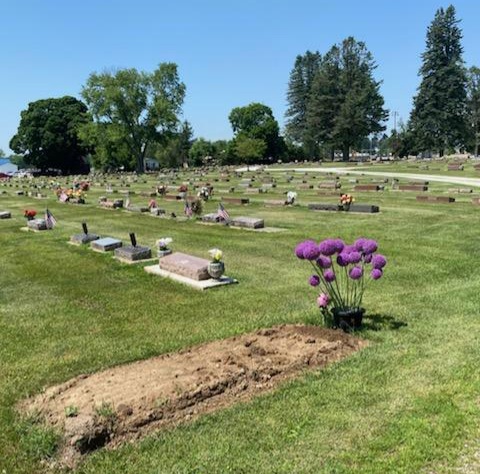
My dad picked my mom’s favorite flower (Jewel of Tibet) and placed it at her grave.
At 7:55 p.m. on a Friday night, I received one of those dreaded calls. My sister called and said that they were taking my mom to the emergency room because she was having a hard time breathing. Fear sunk into my heart that night, but I tried my best to push it aside and believe for the best. The trip to the hospital was precautionary, or so I had hoped.
112 days. My mom spent 112 days in the hospital. When she first checked into the hospital, we were optimistic that she would be out in a couple weeks. But that first weekend she was moved into the Intensive Care Unit. A couple weeks later she was placed on the ventilator. A few weeks after that they placed a tracheostomy tube in her so that she could continue on the ventilator. She developed pneumonia several times. She fought sepsis a couple times. She started to get better and then would have set backs. We would receive positive news one day and then the next we would be given devasting news.
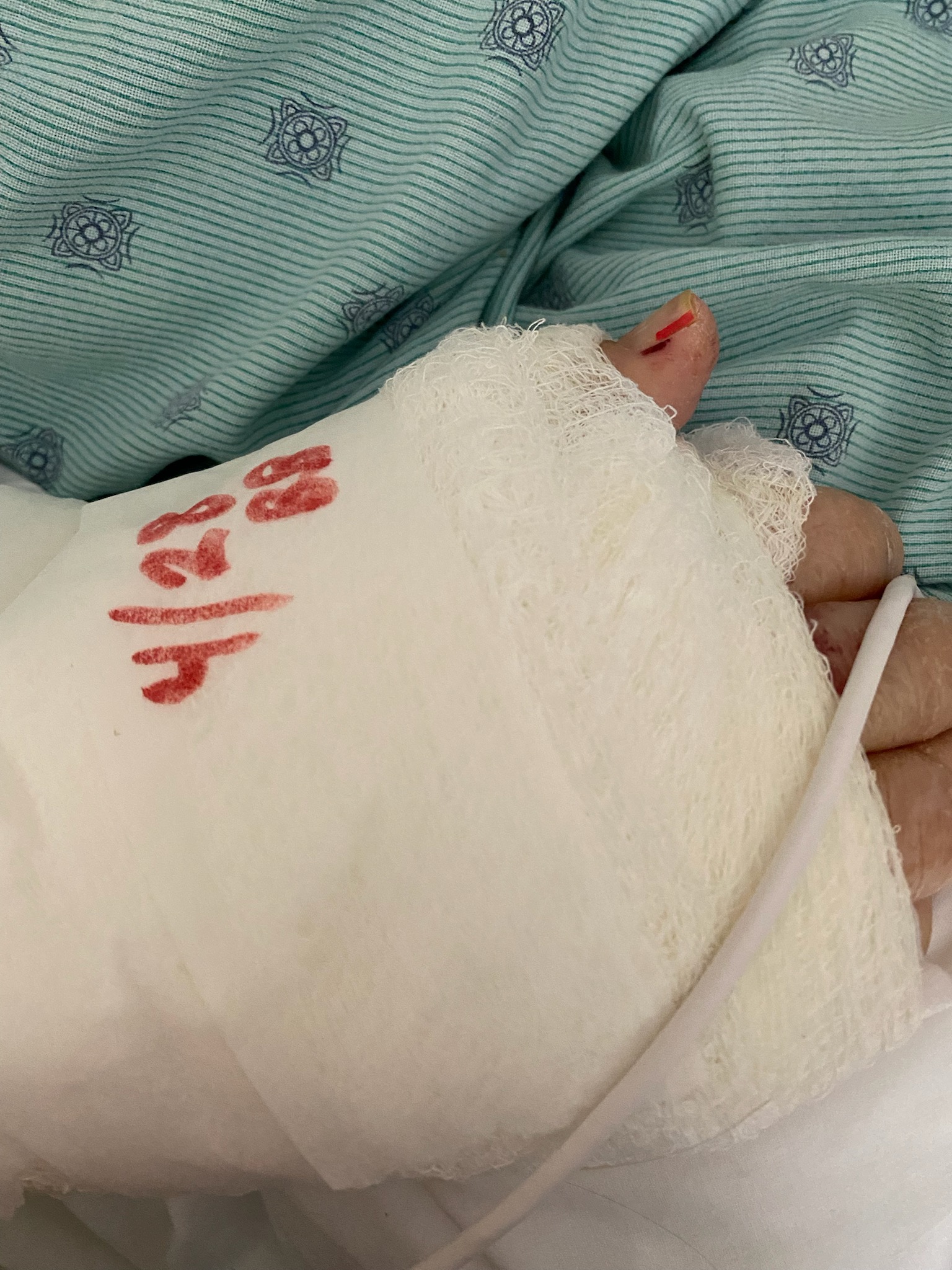
In the middle of the 112 days, we discovered a verse in the Bible that encouraged us. We had no idea that my mom would spend 112 days in the hospital, so when we read the words of Psalm 112, we held onto these words not knowing that God, in His sovereignty, was preparing us. For example, we found Psalm 112 during February. My mom had been in the hospital for about fifty days at that point. There was no numerical connection between Psalm 112 and her spending 112 days in the hospital yet. This is what Psalm 112 states:
“They will have no fear of bad news” (Psalm 112:7).
Whenever my dad, my sisters or myself would receive bad news from the doctor or from lab reports, we would continue to hold onto hope. We were given bad news dozens of times during these 112 days, but we never remained in a place of fear.
We refused to allow bad news to shake us. Our hearts stood steadfast and secure. We trusted in the Lord.
We met several doctors who had one hundred percent trust in medicine and the health care system, but zero percent trust in God. We also met a couple doctors that seemed to be believers. A doctor who is skilled in medicine and trusts in God can become one of the most powerful forces in our world. For God created medicine and He is the author of both natural miracles and supernatural miracles.
Late one night, I was reading a report from one of the doctors. He didn’t give my mom much of a chance for recovery. At the end of his report, he wrote the words, “Prognosis is poor.” When I first read this three-word phrase, fear entered my heart. I envisioned an outcome that I was dreading. But then just as quickly as fear struck me, I was also given a peace that filled my heart instead. I had to make a choice in that moment. Will I fear the bad news, or will I trust God? Will I be consumed with terror, or will I rest in calmness that God is in control?
The doctor was not God. He cannot determine the future. I am not God. I cannot determine the future. God is the one who decides what the future holds.
Why should we have no fear of bad news? Is it because everything will turn out exactly how we want? No. Anyone who has lived long enough realizes that sometimes bad news turns into reality. In the midst of the unknown, God wants us to trust Him. But when we fear the bad news, we worry, we increase our anxiety levels, we fret about things we cannot change and we miss out on learning a valuable lesson: God wants us to rest in Him while we wait, wondering if good or bad will actually happen.
Fast forward to day 112. The bad news turned into reality. My mom died. Why did God, in His sovereignty, allow my mom to live the last several months of her life in the hospital? Would it have been better if she would have died after ten days? Or a month? When I counted up the days in my head as I was driving home from the hospital that night, I couldn’t believe the number. So, I counted again. And then I counted a third time. My mind immediately went to Psalm 112.
In Psalm 112, we are told to not fear bad news. But how does that work? God is specific in how that is possible.
Their hearts are steadfast, trusting in the Lord. Their hearts are secure, they will have no fear;in the end they will look in triumph on their foes (Psalm 112:7-8).
Bad news tries to shake us, but if we have a relationship with Jesus Christ, we remain steadfast and secure no matter what happens. Even in those moments of weakness when we feel our emotions melting into a puddle on the floor, we focus our attention upon God and we trust Him to sustain us and take care of us in the midst of a trial.
But you might ask, “God didn’t come through for you. He allowed your mom to die. Don’t you feel like God failed you?”
No. Because my perspective as a Christian is not just what happens on this earth. Look at verse eight again. “In the end they will look in triumph on their foes (enemies).” In this case, disease and death were the foes. Disease and death won the battle. But because of my faith, I know that in the end, God will make all things right. I hold onto that hope that when I breathe my last breath I will see my mom once again and it will be for millions and billions and trillions of years with no end in sight. With this eternal perspective, death has been swallowed up in victory and no longer has a sting (1 Corinthians 15:54-55).
Let me rephrase that. I will feel the sting of my mom’s death until the day that I die. I miss her fiercely. But I know that I will see her again. I trust in my God because of what He DID (“He has risen” – Matthew 28:6) and what He SAID (“I am making everything new!” – Revelation 21:5).
I will see my mom again someday. I am deeply saddened because I wish she could have enjoyed this upcoming decade and watched more ball games, seen more graduations and taken more family trips.

We will miss her presence at our family events because she will be absent from my earthly life. But as a Christian, I must trust in Christ if I am to claim that He is my savior.
It is easy to call God good when things are good. But to look tragedy in the face and still believe wholeheartedly that God is good, that is faith. And it is a faith that is steadfast and secure.
I have found that God is a God of details. There is no coincidence that God allowed my mom to live 112 days in the hospital and then pointed our family to Psalm 112. You might be thinking how difficult it was to see someone suffering for that long. Yes, it was a long time in our eyes. But when you measure 112 days in view of the next life that is ever lasting, the 112 days are barely a blink.
Most of those 112 days were exhausting emotionally and physically. They were filled with many tears and questions about the future. But during this time, our family had a peace that transcended our own human understanding. It is because we trusted in the Rock eternal.
You will keep in perfect peace those whose minds are steadfast, because they trust in you. Trust in the Lord forever, for the Lord, the Lord himself, is the Rock eternal (Isaiah 26:3-4).

People sometimes die abruptly. People also die after prolonged periods of sickness. Having experienced both of these scenarios, I cannot say which is worse, or better. To die suddenly or after an extended time of suffering both end in the same result, and that result produces heartbreak.
When I was ten years old, I stepped off the school bus on a Friday afternoon with a cheerful anticipation of an entire week of spring break. The Indiana Hoosiers were in the final four and the weather was warming up. Life was good. My feet were barely touching the ground as I approached my house, thinking of all the wonderful events that would unfold during this week of freedom from school.
I opened the front door, and before me stood my dad and mom. Both were crying. With tears streaming down their faces, my dad shared, “Grandma died today.” Those words changed everything. My mind immediately flashed back to the last time I saw her.
Sunday. Five days before. My grandma ate lunch with us after church. Spaghetti. Garlic bread. Lemonade. I scarfed down the food and ran to my room to finish a book I had been reading. When it was time for my grandma to leave, my mom yelled for me to come out of my room to hug and kiss grandma goodbye. I hurriedly exited my room, gave grandma a half-hug and a peck on the cheek and ran back to my room.
Her death taught me the significance of saying goodbye consistently and completely. Goodbyes are important to me now.
That was the last time I would say goodbye to my grandma. If I would have only known, I would have done so many things differently. I would have thanked her for enlightening me to the amazing world of frozen applesauce. For showing me how to turn vanilla ice cream into a chocolate milkshake with Hershey’s syrup and a little milk. For buying me a toy every time we ventured into a shopping mall. But being a typical self-consumed ten-year-old, I never took the time to give her a heart-felt thanks for what a top-notch grandma she had been.
Her death taught me the significance of saying goodbye consistently and completely. Goodbyes are important to me now. Whenever I leave the presence of a loved one, I hug, kiss and say, “See ya later” almost every time.
We never know when it will be our last goodbye.
Fast forward to 2022. My mom checked into the hospital the first Friday in January. She died just a couple days before May. She lived her final four months in a hospital bed. My mom’s death occurred after a long battle of sickness.
My mom’s life leading up to death was different from my grandma’s death. I was in the hospital room when my mom’s heart stopped and she breathed her last breath. As agonizing as it was to say goodbye to my mom in this way, the ability to say goodbye felt like a gift from God after the most exhausting multi-month journey I have ever been on.
My family and I remained hopeful that God would heal my mom from her sickness the entire time. It wasn’t until the final few days before she passed that I started to shift my mind from the hope of earthly healing to preparing myself for life without her this side of eternity.
I was able to say goodbye to my mom in two different ways. First, during the months of January, February, March and April, I told my mom several stories when I was visiting with her and I thanked her for being a terrific mom. Without realizing it in the moment, I was saying goodbye to her. God knew that I was honoring her with stories and gratefulness about her “well-lived” life, but I just thought that I was encouraging her so that she would have enough fight in her to get better and walk out of the hospital eventually.
I am sharing this text I sent my mom with the hope that you will get a glimpse into how I was given the gift of paying tribute to her while she was still alive. Usually, these kinds of words are reserved for a eulogy, but because of the critical state my mom was in, I wanted her to know what she meant to me. On January 21, at 1:51 p.m., I texted my mom:
“Mom, it was so good to see you today. I wish I could hug you or hold your hand. Thank you for taking me fishing when I was little. I can still picture how you would let me fish and would sit with me. You have been such a great mom to me. And you are now a wonderful Grandma. I look forward to seeing you on Sunday.” If you have ever had months to release a loved one from this earth, you know exactly what I am about ready to describe. Many individuals who watch a loved one slowly die from cancer can relate to what I would like to call “the long goodbye.” Every moment is precious. You sense in your heart that this might be the end, but you also hold onto hope that God could intervene and extend your loved one’s life for several more years.
During this long goodbye, especially if it lasts for several months, your heart changes. Your mind begins to transform. Your countenance might look exhausted, but God is working in you. All the pettiness this world offers fades into the background and you become laser-focused upon what really matters. In what ways do you center yourself more fully?
You turn to a sovereign God for answers and listen quietly and expectantly.
The Bible becomes a living source of truth, you crave reading the words on each page.
Kindness grows in your heart for the stranger taking care of your sick loved one.
You desire fellowship with those willing to hold your hand in the valley of shadows.
Perseverance pulls you out of bed in the morning and fuels you to never give up.
But the world around you pushes back the spiritual progress you are making. You are in a life and death situation, but others around you are gleefully discussing a new restaurant they tried out. You are in a constant prayer mode, but you’re forced to listen to a co-worker drone on and on about how they spent their entire weekend binge-watching a must-see series. Your mind is weighed down wondering if life will ever be good again, but you overhear someone complain about the cold weather. Sadly, you fear that as time passes and you find your way out of the tragedy that you will most likely resort back to the same worthless endeavors, trivial conversations and quasi-adventures humans create that hinder them from actually living “for the glory of God” (2 Corinthians 10:31).
Those who are able to linger in the “long goodbye” are taught lessons that have the potential to free their soul to experience an abundant life.
Living in the valley of death for several months shaves off the excess silliness of this world and shapes us into who God has purposed us to become.
If you listen to the whisper of God in the pit, the “long goodbye” will change you for the good. And that good will produce that which is eternal.
Second, there is another kind of goodbye I would like to call the “sacred send-off.” It was the last full week of April and I had already spent time with my mom on Tuesday and Wednesday of that week. But early Thursday morning I received a text from one of my sisters explaining that I needed to come again because the doctors didn’t give her much longer to live.
My dad, my three sisters, several grandchildren, a couple in-laws and I gathered around her bed and we waited for her to pass from this earth to eternity. Ten of us had the privilege of being in the presence of my mom in her final hours.
We took turns speaking to her. With tears streaming down our faces, we thanked her for being an amazing mom and grandma. We said goodbye to her in our own unique ways. We hugged her. We kissed her forehead. We touched her hands and feet. We combed her hair with our fingers. We laughed when someone would say something funny.
The mix of wholesome laughter and sorrowful tears are a recipe for a sacred moment.
In the final few hours of my mom’s life, the hospital room became a sacred place. I could sense the holiness surrounding us in the room. God was preparing His angels to secure my mom’s soul and deliver it safely to heaven (Luke 16:22).
We were not ready to send her off. I was internally hoping that somehow God would intervene in the last possible moment and my mom would open up her eyes, sit up on the side of the bed, and step out onto the floor and walk out of the hospital with us. Amazingly, even when all the signs point towards no hope, we hold onto hope. Hope that someone can be healed on earth. But even when they die, we hold onto the hope that they are in heaven.
God was moving my mom from this earth to heaven. God was not just with us because of His omnipresence, He was completing the work He had started in my mom when she was just a young girl. Her home in heaven was complete. Her life on this planet was complete. She was now ready to begin a new chapter in her existence.
Her God was in the room. Her guardian angels were in the room. Her family was in the room. My mom wouldn’t have wanted it any other way.
She passed peacefully. We were concerned that there might be a struggle in the final moments. But God gave grace for this moment and placed a calmness over her body as her soul exited. The doctor and nurses came into the room to make it official. No pulse. The doctor nodded and confirmed the time of death: 3:23 p.m.
The ten of us remained in that room for a couple more hours. Her soul was no longer with us, but our hearts needed to continue to grieve by saying goodbye a little longer. When you find yourself in a sacred place, you want to linger there. To leave too quickly diminishes the reverence of the moment. And healing happens in that sacred place in ways other places hold no power.
It was hard to comprehend that this was really the end of our four-month journey. We were all exhausted physically, emotionally and spiritually. In God’s sovereign compassion, He orchestrated this gathering around my mom so that we could say goodbye. We could have been awakened in the middle of the night by a nurse informing us that my mom had died, but instead, God in His mercy chose to give us the gift of saying goodbye, together as a family.
Sometimes we do not get to say goodbye to a loved one. But in those rare moments we can give our respects to a dying person, I hope we can sense how close our own souls are to heaven during this time. In a way, we could feel that heaven was opening and Jesus was waiting to welcome my mom home (Acts 7:56). This was a goodbye I will never forget. I will cherish this holy moment until I breathe my last breath here on earth.
Goodbyes are not forever if you are a Christian. They are not the end. Goodbye simply means, “I’ll miss you until we meet again.”
Goodbye mom. I’ll miss you until we meet again.


 pastorjeremyhelmuth