
 I was struck by the question my wife asked me last night as we were laying our heads down on the pillow to sleep. She asked, “What if we stripped everything away from Christmas? What if we got rid of all the good things we look forward to every December? The family gatherings. Decorating the tree. Filling the stockings. Buying presents for loved ones. The food. The ugly sweaters. Watching the same movies. The time off. Watching sports. What if we stopped all of those traditions? Would it still feel like Christmas?”
Would it?
What if all we had every December 25 was the knowledge that Jesus came to this earth to save humanity from their sin problem? Would that be enough for you? As soon as my mind started to process this question, I considered that first Christmas and it was fascinating to comprehend the reaction of everyone who came in contact with Jesus.
The shepherds GLORIFIED AND PRAISED God after they met baby Jesus (Luke 2:20).
Simeon was MOVED BY THE HOLY SPIRIT when he was in the midst of eight day old Jesus (Luke 2:27).
The prophetess Anna GAVE THANKS to God as she interacted with the newborn Jesus (Luke 2:38).
The magi BOWED down and WORSHIPPED the toddler Jesus when they arrived at His house (Matthew 2:11).
The theme of that first Christmas was the realization of the divinity of Jesus and the response to worship Him. What if that was all we had this Christmas? Would that be enough? I think for some of us, it wouldn’t be enough.
The church I lead is offering six different services this weekend. Several people have come up to my wife and I and have lamented at this task that they believe is a burden for myself and ultimately my family. We are busy on the 23rd, 24th, and 25th. I then read an article about many churches which are canceling their services because Christmas Day is on a Sunday and their ultimate goal is for families to be able to spend it together.
Can I say something that is true, but will not be popular to your ears?
Christmas is not about family.
Don’t get me wrong. One of the wonderful traditions of Christmas is the ability to “get-together” and spend time with family. But Christmas isn’t about family. We have allowed our cultural values (which are good) to get in the way of what is most important.
Never forget this truth: Christmas is about the worship of Jesus Christ, the savior of the world.
And if the worship of Jesus Christ is the reason to celebrate Christmas, than wouldn’t we be excited to gather with our brothers and sisters in Christ to worship our king? I wonder if we have forgotten what Christmas is all about. It is about meeting Him and bowing down to Him and giving thanks to Him and worshipping Him. It is not about a big family meal. It is not about opening the presents. It is about Jesus Christ, the savior of the world.
I am not asking you to stop your Christmas traditions. My wife and I have many Christmas traditions and we will continue them into the future. But we know that if all was stripped away, we could still enjoy Christmas because we know that it is all about worshiping our leader, Jesus Christ.
So don’t feel bad for us that we have to be at six different services this weekend (it is not that different than a regular weekend anyway). We will still be able to spend time with family. We still decorated a tree. We will still open up gifts. We will still have time to relax. But there is a joy which we have found in gathering with other Christians around this time of year that has become a favorite for us.
And when you realize what Christmas is all about, it is not only worth it, but a privilege which we will cherish for all eternity. Just think about it for a moment. What will we do when we get to heaven someday? Will we open presents? Will we hang lights up on our homes? Will we stuff the stockings? I am not sure about those traditions, but I do know one thing we will be doing. We will be worshiping Jesus Christ as the leader and forgiver of our eternal life.
Therefore, the older we get on this earth, the more we should realize that what we do here should reflect what we will do in heaven. So, make sure you focus on the most important aspect of Christmas. Otherwise, you will be teaching those around you that Christmas is all about the “other things,” when it is really simple. It is about Jesus, and giving Him the honor He deserves.
 When I was in elementary school, I was one of the “three kings” in my church’s Christmas musical. I had one line and it had something to do with giving baby Jesus a gift. Growing up, I just assumed that the wise men who visited Bethlehem were simply three men who rode camels from an eastern land. Little did I know that these men were much more than three wandering wise men. When we realize who these men really were and what they represented, it helps make sense of other parts of the Christmas story. As I researched the history of the Magi, I found 10 facts which are fascinating. I understand that using the word “fact” might be a stretch for some of these, but the logical deductions based upon the evidence seem to point towards the validity of these statements.
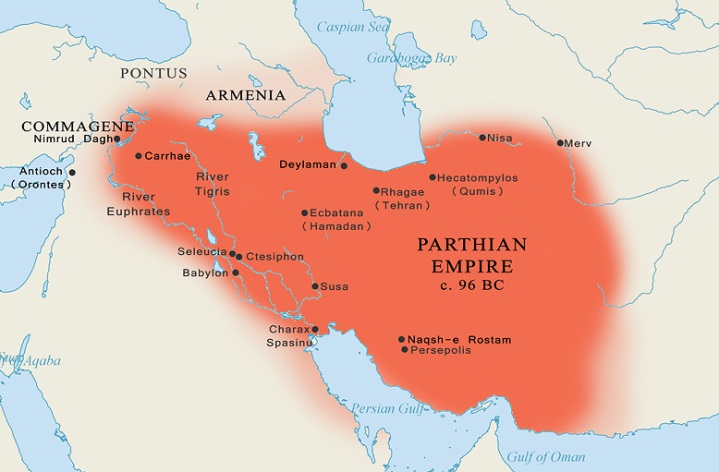 FACT 1: The Magi traveled from the Parthian Empire. The Parthian Empire was a vast ancient empire, which ruled in Asia at the same time that the Roman Empire ruled over the Mediterranean region. It is believed that when Israel was exiled into this region centuries before, they settled there and eventually rose to power and actually had kings with Israelite blood who ruled over this empire.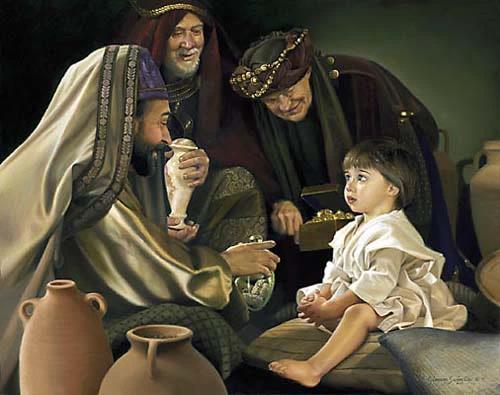
 FACT #8: Herod vented his pent-up rage by murdering all boys (under 2) in Bethlehem. After the Magi left, Herod became “furious” (Matthew 2:16) and vented his pent-up rage by murdering all male children in Bethlehem under age two. Official reports surely had to be filed with Augustus Caesar in Rome about this highly unusual event. It appears that Herod was trying to squelch any kind of potential for a new king to arise in his land.
 FACT #10: The Magi might have monitored the events of Jesus’ life. It is possible that the Magi discussed the possibility that this child Jesus, born under such unusual circumstances, might one day take the throne of the Parthian Empire. This delegation of Parthian Magi likely would have stayed in contact with Jesus in future years and monitored the events of His life.
 pastorjeremyhelmuth